Note: some people may find this article distressing and upsetting.
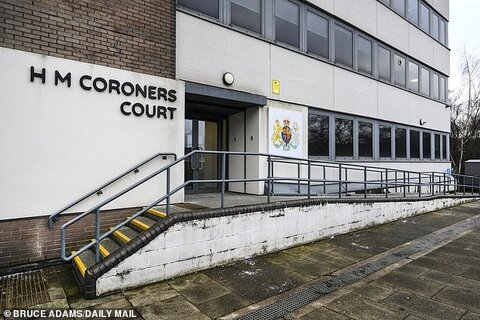
An inquest has concluded into the death of Oliver Robinson, a young man who had long standing mental health difficulties. The coroner found that a private prescription for medicinal cannabis contributed to his death, alongside several other complex factors.
The inquest into the death of Oliver Robinson concluded today, 30 January 2026, with the Coroner finding that the prescription of medicinal cannabis by Curaleaf Clinic reinforced Oliver’s view that cannabis was essential for his treatment of depression and was sending Oliver the message that it was okay to continue using cannabis.
The Court accepted that Oliver’s death was multi-factorial; Oliver had longstanding depression and was suffering from psycho-social stressors, which included a dependency on cannabis. Whether medicinal or street cannabis, the Coroner concluded that this formed part of the dysregulation and mood instability that Oliver experienced in the lead up to his death. The Coroner was satisfied on the balance of probabilities that the prescription of medicinal cannabis contributed to Oliver’s death, as it enabled a pre-existing dependency on cannabis; gave cannabis a sense of legitimacy to Oliver; created barriers to the advice given by Oliver’s other treating consultant psychiatrists; contributed to Oliver’s dysregulation and worsening mental state; and was part of the causal chain of events that led to his death.
This is thought to be the first time that a prescription of medicinal cannabis has been found to have contributed to a death.
The Coroner found that the prescription of cannabis acted as an obstacle to appropriate treatment for depression. The decision of Curaleaf Clinic and Dr Bhoskar to prescribe cannabis to Oliver was based on incomplete information. The prescription maintained and reinforced Oliver’s dependency to cannabis and was an obstacle to Oliver engaging with mental health and substance misuse treatment. The prescription of cannabis contributed to the emotional dysregulation that led to Oliver’s death.
The Coroner found that there was no evidence that Oliver intended to take his life, rather his behaviour was more consistent with a depressed state and was an intention to communicate distress rather than an intention to end his life.
The Coroner is making a Prevention of Future Deaths report to Curaleaf Clinic with her concerns that medicinal cannabis was prescribed based on incomplete clinical information; there was no meaningful communication between Curaleaf and treating psychiatrist; and that medicinal cannabis was prescribed to Oliver in light of his known cannabis dependency and severe mental illness.
Dr Bhoskar will be referred to the GMC following the Coroner’s findings.
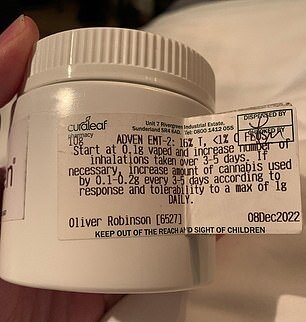
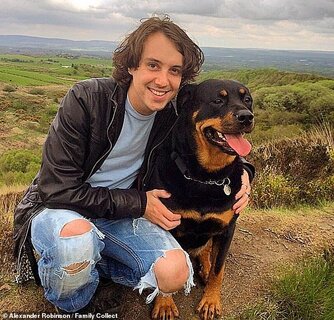
Oliver died on 24 November 2023, aged 34. Oliver had a long and complex history of serious mental ill-health. At the time of his death, Oliver had been in receipt of a private prescription for medicinal cannabis from Curaleaf Clinic.
Over the course of six days of evidence, the Coroner heard evidence from a wide range of witnesses, including Oliver’s family, NHS clinicians, private healthcare providers, Greater Manchester Police, and an expert Consultant Psychiatrist, Dr Pavan Chahl. The evidence focused on Oliver’s mental health history; his contact with services in the months leading to his death; and the appropriateness of the prescription of medicinal cannabis.
Oliver had previously been under the care of the Priory and the NHS, and he had a history of two inpatient admissions for treatment for depression and low mood. Oliver also had a history of addictive behaviours and one of his diagnoses was mental and behavioural disorders due to cannabinoid dependency. Oliver’s GP, his Priory psychiatrist and his NHS psychiatrist all spoke about Oliver with a degree of warmth and affection.
Oliver’s brother, Alexander Robinson, gave evidence that Oliver was a very gentle, loving and kind individual. He used to be a successful property consultant. After falling into business, financial and relationship difficulties, Oliver began suffering with his mental health, and developed addictive behaviours. Around 2022, there was a change in his character and Oliver suddenly became incredibly selfish, unstable, angry and violent. He displayed behaviour his family had never seen before, and his family attribute this to cannabis use, specifically when he was not able to obtain cannabis. After starting his cannabis prescription, Oliver would often issue threats of suicide.
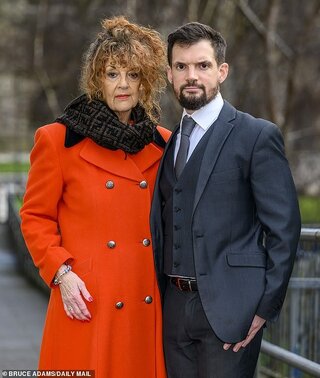
Oliver’s brother Alexander Robinson, speaking on behalf of the family, said:
“Our family have been through years of torment. My brother’s last year of his life was torture for him too. It is our belief that if he had not been prescribed cannabis, not only would he still be with us today, but a lot of this pain and suffering could have been avoided. We’re pleased that the coroner has found that this prescription probably contributed to his death.
“We sincerely thank the Coroner and their office for their thorough review and attention to detail, and to all the witnesses who gave evidence.”
Alice Wood of Farleys Solicitors said:
“This is a significant finding that one of the features that contributed to Oliver’s death was the prescription of medicinal cannabis and it highlights the importance of prescribers having a complete medical picture and considering the real risks that come with a cannabis prescription.
“There are real concerns here about the role of medicinal cannabis prescribers and their ethical duties. “First do no harm” is a fundamental principle of medical ethics.
“Here, cannabis was prescribed to a vulnerable individual with known addictive behaviours, and there was a lack of consideration as to the impact on his mental health, and whether he could afford the cost of the private prescriptions.
“The expert psychiatrist gave clear evidence that there is a lack of evidence in relation to the efficacy of medicinal cannabis in treating depression, and on the contrary there is evidence to suggest it can cause depression, or make depression worse. On the evidence of the expert psychiatrist, Oliver should have never been prescribed medicinal cannabis.
“We are grateful to the Coroner for a careful and detailed examination of the evidence and for allowing a full exploration of the issues raised by Oliver’s family.”
Oliver’s Mental Health History
Evidence from treating clinicians described a complex picture involving depression, anxiety, suicidal ideation, and increasingly significant addictive behaviours, including gambling and cannabis use.
Oliver had diagnoses of Recurrent Depressive Disorder and Mental and Behavioural Disorder due to Cannabinoid Use. By 2023, multiple clinicians had identified concerns that substance use and addiction were a central feature of Oliver’s presentation, and that cannabis was interfering with Oliver’s mood and the effectiveness of his mental health treatment. Oliver’s Priory and NHS psychiatrists were opposed to the use of cannabis, seeing it as an obstacle to his recovery.
The inquest heard that Oliver suffered from a recurrent depressive disorder. Coupled with two inpatient admissions to psychiatric facilities and a history of suicidality, expert Consultant Psychiatrist Dr Chahl gave evidence that in his opinion, Oliver had a severe psychiatric condition.
Under current BNF (British National Formulary) guidance, medicinal cannabis should not be prescribed to someone with a history of a severe psychiatric disorder. BNF set out side-effects of medicinal cannabis to include depression and euphoric mood as common or very common side effects, and suicidal ideation as an uncommon, but the expert stressed not unlikely, side-effect.
Prescription of Medicinal Cannabis
Medicinal cannabis was legalised in the UK in 2018. Medicinal cannabis is prescribed for depression off-licence, as it is not licenced for this condition.
Oliver self-referred himself to Curaleaf Clinic in February 2022 and underwent an initial consultation over video with Dr Urmila Bhoskar, a Child and Adolescent Psychiatrist, in April 2022. A Multi-Disciplinary Meeting took place on 5 May 2022, where it was agreed that Oliver met the criteria for the trial of medicinal cannabis.
Dr Bhoskar was employed by Curaleaf, who manufacture and distribute medicinal cannabis. Medicinal cannabis is the only prescription that Curaleaf provide.
The medical records Dr Bhoskar considered were limited and out of date, and she did not speak with the other treating clinicians Oliver was involved with. The expert psychiatrist said that in his opinion, as a child and adolescent psychiatrist Dr Bhoskar was not appropriately qualified to be treating an adult patient, and when compared to an adult psychiatrist, she would have limited experience of patients with treatment resistant depression or issues of substance misuse and additions. The expert said that experience matters and Oliver’s presentation was complex, which required a psychiatrist with appropriate experience and background. The expert also expressed concerns on the composition of the multi-disciplinary panel that determined the prescription was appropriate.
Oliver was also accessing street cannabis, which Curaleaf was aware of, which has higher THC levels. It is the THC level that is associated with behavioural and emotional dysregulation. Oliver’s family believe that in Oliver’s mind, the legal prescription of cannabis legitimised the use of cannabis. The expert psychiatrist gave evidence that the prescription of medicinal cannabis would have maintained Oliver’s dependency and made the ongoing treatment of his depression less effective. The expert said that his prescription likely made him more depressed and elevated his risk.
The expert gave evidence that cannabis in the short-term can make people feel less anxious, but longer use and higher quantities can lead to mood instability, anxiety and an increased risk of long-term drug-induced psychosis, including schizophrenia.
The expert also said that cannabis acts an enzyme inhibitor and can worsen some of the side effects of anti-depressant medication, such as sedation or stimulating anxiety, which can lead to patients not wanting to comply with psychiatric treatment.
In the months and days before Oliver’s death, he became very dysregulated, and was sending texts threatening to harm himself if he could not get cannabis.
Whilst there is evidence which show positive outcomes for medicinal cannabis, the commonality in these studies is that the patients have extreme pain and are on palliative care. The expert psychiatrist gave evidence that these studies cannot be compared to Oliver’s presentation of a recurrent depressive illness. A research paper put forward by Curaleaf in support of medicinal cannabis use in depression was authored by psychiatrists employed by Curaleaf, who produce and prescribe medicinal cannabis. Current UK guidelines state that severe psychiatric disorders are a contra-indicator for the prescription of cannabis, and suicidality is a known side-effect.
Escalating Risk and Missed Opportunities
The evidence demonstrated that in the months leading to Oliver’s death, he experienced increasing distress and instability. Oliver had numerous attendances to A&E reporting suicidal thoughts and that his difficulties included not being able to access cannabis through the NHS. Dr Bhoskar was unaware of Oliver’s A&E attendances, police involvement, or arrests over these months.
Whilst the expert’s evidence was that medicinal cannabis should not have been prescribed in the first place, he went on to set out a number of missed opportunities for a review of the appropriateness of the ongoing cannabis prescription. The expert criticised the quality of the documentation of Oliver’s prescription reviews at Curaleaf, and there were internal inconsistences within the same appointment, for example Oliver would state struggles he was having, such as with finances or housing, but then there would be a positive spin on the review and there were repeated entries of “We were pleased to hear he found some benefit” and a repeat prescription was issued. He gave evidence that Oliver’s withdrawal symptoms were minimised.
In November 2023, Oliver was becoming increasingly frustrated with mental health services and, not being able to obtain cannabis on the NHS, and he disputed his diagnosis of cannabinoid dependency.
Greater Manchester Police Involvement
Officers of Greater Manchester Police attended Oliver’s home on 22 and 24 November 2023. A Professional Standards Directorate investigation was completed to consider the police responses to these incidents.
On 22 November 2023, police received a report from North West Ambulance Service requesting assistance after reports from Oliver that he was in unsafe housing and had cut his wrist stating that he was going to end his life. Police attended with a mental health nurse and spoke with Oliver. A taxi had been requested to take Oliver to hospital, which was cancelled in light of comments Oliver made to the attending police officer.
On 24 November 2023, at 10:12 a report of threats to burn down a property was reported to Bury Housing after Oliver contacted the housing stating he was homeless. At 11:33, a friend of Oliver saw a text message Oliver had sent at 10:36 saying he had a noose in his hand, and reported to the police. The two logs were then linked together. Police arrived at 11:55 and found Oliver deceased.
The investigation found that patrols were not allocated within the Graded Response Policy Target and there had been a non-implementation of the Escalation Policy, but there was no information to suggest that that the death could have been prevented.
The family are represented by Alice Wood of Farleys Solicitors and Timothy Connolly of St John’s Buildings Barristers Chambers.
The other Interested Persons were Curaleaf, Dr Bhoskar (the prescribing clinician), the Priory, Oliver’s GP practice, Pennine Care Trust and Greater Manchester Police. [/SPOILER]
https://www.farleys.com/case_study/...n-of-medicinal-cannabis-contributed-to-death/
Further disclaimer:
If you or someone you know is feeling deeply affected by this story, please reach out to your GP or MC clinic for support. For urgent help, you can contact trained support services such as:
Samaritans – 116 123 (UK & ROI)
Mind – 0300 123 3393
NHS 111 – for urgent health concerns
999 - if you need it, you need it.
You are not alone, and support is available.
An inquest has concluded into the death of Oliver Robinson, a young man who had long standing mental health difficulties. The coroner found that a private prescription for medicinal cannabis contributed to his death, alongside several other complex factors.
The inquest into the death of Oliver Robinson concluded today, 30 January 2026, with the Coroner finding that the prescription of medicinal cannabis by Curaleaf Clinic reinforced Oliver’s view that cannabis was essential for his treatment of depression and was sending Oliver the message that it was okay to continue using cannabis.
The Court accepted that Oliver’s death was multi-factorial; Oliver had longstanding depression and was suffering from psycho-social stressors, which included a dependency on cannabis. Whether medicinal or street cannabis, the Coroner concluded that this formed part of the dysregulation and mood instability that Oliver experienced in the lead up to his death. The Coroner was satisfied on the balance of probabilities that the prescription of medicinal cannabis contributed to Oliver’s death, as it enabled a pre-existing dependency on cannabis; gave cannabis a sense of legitimacy to Oliver; created barriers to the advice given by Oliver’s other treating consultant psychiatrists; contributed to Oliver’s dysregulation and worsening mental state; and was part of the causal chain of events that led to his death.
This is thought to be the first time that a prescription of medicinal cannabis has been found to have contributed to a death.
The Coroner found that the prescription of cannabis acted as an obstacle to appropriate treatment for depression. The decision of Curaleaf Clinic and Dr Bhoskar to prescribe cannabis to Oliver was based on incomplete information. The prescription maintained and reinforced Oliver’s dependency to cannabis and was an obstacle to Oliver engaging with mental health and substance misuse treatment. The prescription of cannabis contributed to the emotional dysregulation that led to Oliver’s death.
The Coroner found that there was no evidence that Oliver intended to take his life, rather his behaviour was more consistent with a depressed state and was an intention to communicate distress rather than an intention to end his life.
The Coroner is making a Prevention of Future Deaths report to Curaleaf Clinic with her concerns that medicinal cannabis was prescribed based on incomplete clinical information; there was no meaningful communication between Curaleaf and treating psychiatrist; and that medicinal cannabis was prescribed to Oliver in light of his known cannabis dependency and severe mental illness.
Dr Bhoskar will be referred to the GMC following the Coroner’s findings.
Oliver died on 24 November 2023, aged 34. Oliver had a long and complex history of serious mental ill-health. At the time of his death, Oliver had been in receipt of a private prescription for medicinal cannabis from Curaleaf Clinic.
Over the course of six days of evidence, the Coroner heard evidence from a wide range of witnesses, including Oliver’s family, NHS clinicians, private healthcare providers, Greater Manchester Police, and an expert Consultant Psychiatrist, Dr Pavan Chahl. The evidence focused on Oliver’s mental health history; his contact with services in the months leading to his death; and the appropriateness of the prescription of medicinal cannabis.
Oliver had previously been under the care of the Priory and the NHS, and he had a history of two inpatient admissions for treatment for depression and low mood. Oliver also had a history of addictive behaviours and one of his diagnoses was mental and behavioural disorders due to cannabinoid dependency. Oliver’s GP, his Priory psychiatrist and his NHS psychiatrist all spoke about Oliver with a degree of warmth and affection.
Oliver’s brother, Alexander Robinson, gave evidence that Oliver was a very gentle, loving and kind individual. He used to be a successful property consultant. After falling into business, financial and relationship difficulties, Oliver began suffering with his mental health, and developed addictive behaviours. Around 2022, there was a change in his character and Oliver suddenly became incredibly selfish, unstable, angry and violent. He displayed behaviour his family had never seen before, and his family attribute this to cannabis use, specifically when he was not able to obtain cannabis. After starting his cannabis prescription, Oliver would often issue threats of suicide.
Oliver’s brother Alexander Robinson, speaking on behalf of the family, said:
“Our family have been through years of torment. My brother’s last year of his life was torture for him too. It is our belief that if he had not been prescribed cannabis, not only would he still be with us today, but a lot of this pain and suffering could have been avoided. We’re pleased that the coroner has found that this prescription probably contributed to his death.
“We sincerely thank the Coroner and their office for their thorough review and attention to detail, and to all the witnesses who gave evidence.”
Alice Wood of Farleys Solicitors said:
“This is a significant finding that one of the features that contributed to Oliver’s death was the prescription of medicinal cannabis and it highlights the importance of prescribers having a complete medical picture and considering the real risks that come with a cannabis prescription.
“There are real concerns here about the role of medicinal cannabis prescribers and their ethical duties. “First do no harm” is a fundamental principle of medical ethics.
“Here, cannabis was prescribed to a vulnerable individual with known addictive behaviours, and there was a lack of consideration as to the impact on his mental health, and whether he could afford the cost of the private prescriptions.
“The expert psychiatrist gave clear evidence that there is a lack of evidence in relation to the efficacy of medicinal cannabis in treating depression, and on the contrary there is evidence to suggest it can cause depression, or make depression worse. On the evidence of the expert psychiatrist, Oliver should have never been prescribed medicinal cannabis.
“We are grateful to the Coroner for a careful and detailed examination of the evidence and for allowing a full exploration of the issues raised by Oliver’s family.”
Oliver’s Mental Health History
Evidence from treating clinicians described a complex picture involving depression, anxiety, suicidal ideation, and increasingly significant addictive behaviours, including gambling and cannabis use.
Oliver had diagnoses of Recurrent Depressive Disorder and Mental and Behavioural Disorder due to Cannabinoid Use. By 2023, multiple clinicians had identified concerns that substance use and addiction were a central feature of Oliver’s presentation, and that cannabis was interfering with Oliver’s mood and the effectiveness of his mental health treatment. Oliver’s Priory and NHS psychiatrists were opposed to the use of cannabis, seeing it as an obstacle to his recovery.
The inquest heard that Oliver suffered from a recurrent depressive disorder. Coupled with two inpatient admissions to psychiatric facilities and a history of suicidality, expert Consultant Psychiatrist Dr Chahl gave evidence that in his opinion, Oliver had a severe psychiatric condition.
Under current BNF (British National Formulary) guidance, medicinal cannabis should not be prescribed to someone with a history of a severe psychiatric disorder. BNF set out side-effects of medicinal cannabis to include depression and euphoric mood as common or very common side effects, and suicidal ideation as an uncommon, but the expert stressed not unlikely, side-effect.
Prescription of Medicinal Cannabis
Medicinal cannabis was legalised in the UK in 2018. Medicinal cannabis is prescribed for depression off-licence, as it is not licenced for this condition.
Oliver self-referred himself to Curaleaf Clinic in February 2022 and underwent an initial consultation over video with Dr Urmila Bhoskar, a Child and Adolescent Psychiatrist, in April 2022. A Multi-Disciplinary Meeting took place on 5 May 2022, where it was agreed that Oliver met the criteria for the trial of medicinal cannabis.
Dr Bhoskar was employed by Curaleaf, who manufacture and distribute medicinal cannabis. Medicinal cannabis is the only prescription that Curaleaf provide.
The medical records Dr Bhoskar considered were limited and out of date, and she did not speak with the other treating clinicians Oliver was involved with. The expert psychiatrist said that in his opinion, as a child and adolescent psychiatrist Dr Bhoskar was not appropriately qualified to be treating an adult patient, and when compared to an adult psychiatrist, she would have limited experience of patients with treatment resistant depression or issues of substance misuse and additions. The expert said that experience matters and Oliver’s presentation was complex, which required a psychiatrist with appropriate experience and background. The expert also expressed concerns on the composition of the multi-disciplinary panel that determined the prescription was appropriate.
Oliver was also accessing street cannabis, which Curaleaf was aware of, which has higher THC levels. It is the THC level that is associated with behavioural and emotional dysregulation. Oliver’s family believe that in Oliver’s mind, the legal prescription of cannabis legitimised the use of cannabis. The expert psychiatrist gave evidence that the prescription of medicinal cannabis would have maintained Oliver’s dependency and made the ongoing treatment of his depression less effective. The expert said that his prescription likely made him more depressed and elevated his risk.
The expert gave evidence that cannabis in the short-term can make people feel less anxious, but longer use and higher quantities can lead to mood instability, anxiety and an increased risk of long-term drug-induced psychosis, including schizophrenia.
The expert also said that cannabis acts an enzyme inhibitor and can worsen some of the side effects of anti-depressant medication, such as sedation or stimulating anxiety, which can lead to patients not wanting to comply with psychiatric treatment.
In the months and days before Oliver’s death, he became very dysregulated, and was sending texts threatening to harm himself if he could not get cannabis.
Whilst there is evidence which show positive outcomes for medicinal cannabis, the commonality in these studies is that the patients have extreme pain and are on palliative care. The expert psychiatrist gave evidence that these studies cannot be compared to Oliver’s presentation of a recurrent depressive illness. A research paper put forward by Curaleaf in support of medicinal cannabis use in depression was authored by psychiatrists employed by Curaleaf, who produce and prescribe medicinal cannabis. Current UK guidelines state that severe psychiatric disorders are a contra-indicator for the prescription of cannabis, and suicidality is a known side-effect.
Escalating Risk and Missed Opportunities
The evidence demonstrated that in the months leading to Oliver’s death, he experienced increasing distress and instability. Oliver had numerous attendances to A&E reporting suicidal thoughts and that his difficulties included not being able to access cannabis through the NHS. Dr Bhoskar was unaware of Oliver’s A&E attendances, police involvement, or arrests over these months.
Whilst the expert’s evidence was that medicinal cannabis should not have been prescribed in the first place, he went on to set out a number of missed opportunities for a review of the appropriateness of the ongoing cannabis prescription. The expert criticised the quality of the documentation of Oliver’s prescription reviews at Curaleaf, and there were internal inconsistences within the same appointment, for example Oliver would state struggles he was having, such as with finances or housing, but then there would be a positive spin on the review and there were repeated entries of “We were pleased to hear he found some benefit” and a repeat prescription was issued. He gave evidence that Oliver’s withdrawal symptoms were minimised.
In November 2023, Oliver was becoming increasingly frustrated with mental health services and, not being able to obtain cannabis on the NHS, and he disputed his diagnosis of cannabinoid dependency.
Greater Manchester Police Involvement
Officers of Greater Manchester Police attended Oliver’s home on 22 and 24 November 2023. A Professional Standards Directorate investigation was completed to consider the police responses to these incidents.
On 22 November 2023, police received a report from North West Ambulance Service requesting assistance after reports from Oliver that he was in unsafe housing and had cut his wrist stating that he was going to end his life. Police attended with a mental health nurse and spoke with Oliver. A taxi had been requested to take Oliver to hospital, which was cancelled in light of comments Oliver made to the attending police officer.
On 24 November 2023, at 10:12 a report of threats to burn down a property was reported to Bury Housing after Oliver contacted the housing stating he was homeless. At 11:33, a friend of Oliver saw a text message Oliver had sent at 10:36 saying he had a noose in his hand, and reported to the police. The two logs were then linked together. Police arrived at 11:55 and found Oliver deceased.
The investigation found that patrols were not allocated within the Graded Response Policy Target and there had been a non-implementation of the Escalation Policy, but there was no information to suggest that that the death could have been prevented.
The family are represented by Alice Wood of Farleys Solicitors and Timothy Connolly of St John’s Buildings Barristers Chambers.
The other Interested Persons were Curaleaf, Dr Bhoskar (the prescribing clinician), the Priory, Oliver’s GP practice, Pennine Care Trust and Greater Manchester Police. [/SPOILER]
https://www.farleys.com/case_study/...n-of-medicinal-cannabis-contributed-to-death/
Further disclaimer:
If you or someone you know is feeling deeply affected by this story, please reach out to your GP or MC clinic for support. For urgent help, you can contact trained support services such as:
Samaritans – 116 123 (UK & ROI)
Mind – 0300 123 3393
NHS 111 – for urgent health concerns
999 - if you need it, you need it.
You are not alone, and support is available.
Last edited: