
As the European cannabis conference season gets started, industry experts, lawmakers, regulators and business owners are facing greater mainstream scrutiny than ever before.
From police raids in Portugal and North Macedonia, to a media backlash in the UK, operators are facing increasing questions about the industry’s resilience in the face of coordinated pushback.
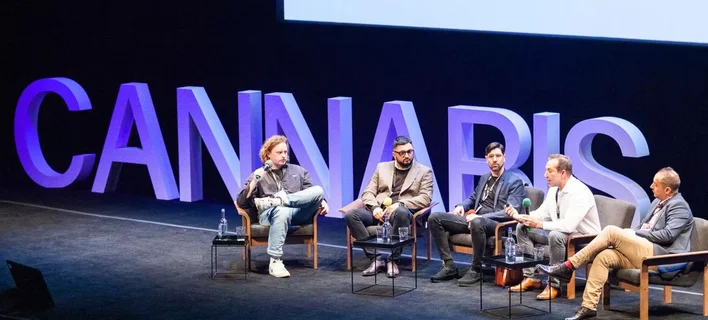
Europe’s largest medical cannabis market, once again, finds itself at the very centre of this debate. Delegates at this year’s ICBC Berlin were offered insights from Germany’s most informed voices to get the latest picture on where the thriving market currently stands, and whether regulatory headwinds will push capital toward neighbouring markets.
Here are our key insights from across the event…
For investors and founders, the clearest shift of the past twelve months has been structural. David Hyde, M&A specialist and ICBC panellist, argued in an interview with Krautinvest ahead of the event that the current uptick in deal activity reflects long-overdue valuation normalisation.
The ‘hope premium’ has been stripped from founder expectations, with performance-based earn-outs and milestone-driven closings now the dominant deal architecture. A shift, he argues, that is increasingly drawing the attention of international operators and domestic consolidators.
These generally fit into a handful of distinct categories, including US MSOs seeking operators with existing patient data, Canadian LPs focused on supply chain efficiency, and European consolidators seeking pharmacy partnerships and similar bolt-on deals.
Furthermore, legacy players such as pharmaceutical distributors are seeking acquisitions that are EU-GMP compliant, while family offices and private equity firms are similarly targeting asset-light, profitable companies for M&A.
Those at the top of the M&A wishlist, he suggests, are operators with well-established pharmacy and prescriber relationships, with extensive patient behaviour data and a trusted reputation.
Attorney Judith Heimbürger of Gunnercooke was more cautious on the broader state of the widely-cited consolidation wave.
The inherent regulatory uncertainty associated with the industry, she says, is impacting valuations while driving risk-sharing deal structures. As such, companies that retain development potential under regulatory changes are currently at an advantage when it comes to M&A targets.
The most immediate legal development discussed at ICBC was the German Federal Court of Justice ruling of 26 March 2026 (I ZR 74/25), which Heimbürger said carries direct compliance implications for telemedicine operators.
The BGH found that platforms engage in impermissible advertising if condition-specific information is used to facilitate or trigger treatment requests to cooperating physicians. The practical effect is elevated cease-and-desist risk and rising compliance costs, as operators revise online presence and referral processes to remove advertising-driven demand triggers.
A panel on international regulatory harmonisation, taking place on day two of the conference, touched on the persistent fragmentation running through every level of the cannabis supply chain.
Moderator Daniel Haymann, a Swiss attorney, gave a clear example of the fragmentation operators face: a producer holding full EU-GMP certification still faces German auditor re-qualification; a Berlin pharmacist cannot necessarily prepare the same magistral formulation as one in Madrid; a Zurich patient has no guarantee of consistent product availability in six months.
The panel’s most concrete illustration involved an Australian cannabis shipment rejected at the German border over a drying-step classification discrepancy, despite a mutual recognition agreement between the two jurisdictions.
As such, the panel agreed that GACP and GMP represent the most achievable near-term harmonisation targets, with the Swiss accreditation model, where state authority underwrites third-party certification, cited as a possible workable path forward.
Discussions of the scientific landscape reflected an industry increasingly aware that long-term legitimacy depends on evidence generation.
Panellists pointed to the regulatory anomaly of CBN and CBG remaining prohibited in Germany while high-THC flower is legally dispensed as emblematic of the inconsistencies still complicating the minor cannabinoids sector.
“It breaks my heart to hear people in Germany talk to me about how CBN and CBG is banned while they’re smoking high THC flower,” one panellist noted.
The argument for industry-funded, collaborative research, modelled in part on lessons from the psychedelics sector’s more coordinated approach to evidence-building, found clear support.
“Unfortunately, in Canada, some of us did have tens of millions of dollars, but ended up giving it to executive salaries rather than putting it into research.
“Without the research and education, we will not prosper as we could”.
The post Berlin 2026: European Cannabis M&A Finds its Footing appeared first on Business of Cannabis.
Continue reading...
From police raids in Portugal and North Macedonia, to a media backlash in the UK, operators are facing increasing questions about the industry’s resilience in the face of coordinated pushback.
Europe’s largest medical cannabis market, once again, finds itself at the very centre of this debate. Delegates at this year’s ICBC Berlin were offered insights from Germany’s most informed voices to get the latest picture on where the thriving market currently stands, and whether regulatory headwinds will push capital toward neighbouring markets.
Here are our key insights from across the event…
A maturing M&A market
For investors and founders, the clearest shift of the past twelve months has been structural. David Hyde, M&A specialist and ICBC panellist, argued in an interview with Krautinvest ahead of the event that the current uptick in deal activity reflects long-overdue valuation normalisation.
The ‘hope premium’ has been stripped from founder expectations, with performance-based earn-outs and milestone-driven closings now the dominant deal architecture. A shift, he argues, that is increasingly drawing the attention of international operators and domestic consolidators.
These generally fit into a handful of distinct categories, including US MSOs seeking operators with existing patient data, Canadian LPs focused on supply chain efficiency, and European consolidators seeking pharmacy partnerships and similar bolt-on deals.
Furthermore, legacy players such as pharmaceutical distributors are seeking acquisitions that are EU-GMP compliant, while family offices and private equity firms are similarly targeting asset-light, profitable companies for M&A.
Those at the top of the M&A wishlist, he suggests, are operators with well-established pharmacy and prescriber relationships, with extensive patient behaviour data and a trusted reputation.
Attorney Judith Heimbürger of Gunnercooke was more cautious on the broader state of the widely-cited consolidation wave.
The inherent regulatory uncertainty associated with the industry, she says, is impacting valuations while driving risk-sharing deal structures. As such, companies that retain development potential under regulatory changes are currently at an advantage when it comes to M&A targets.
Legal risk: the BGH ruling
The most immediate legal development discussed at ICBC was the German Federal Court of Justice ruling of 26 March 2026 (I ZR 74/25), which Heimbürger said carries direct compliance implications for telemedicine operators.
The BGH found that platforms engage in impermissible advertising if condition-specific information is used to facilitate or trigger treatment requests to cooperating physicians. The practical effect is elevated cease-and-desist risk and rising compliance costs, as operators revise online presence and referral processes to remove advertising-driven demand triggers.
READ MORE…
Cannabis Europa Heads to London Amid €1.5 Billion European Market Surge

The Business of Cannabis Awards Return to London for a Third Year

Cannabis Europa Launches Reimagined VIP Experience: A New Standard for Senior Decision Makers
Harmonisation: the infrastructure problem
A panel on international regulatory harmonisation, taking place on day two of the conference, touched on the persistent fragmentation running through every level of the cannabis supply chain.
Moderator Daniel Haymann, a Swiss attorney, gave a clear example of the fragmentation operators face: a producer holding full EU-GMP certification still faces German auditor re-qualification; a Berlin pharmacist cannot necessarily prepare the same magistral formulation as one in Madrid; a Zurich patient has no guarantee of consistent product availability in six months.
The panel’s most concrete illustration involved an Australian cannabis shipment rejected at the German border over a drying-step classification discrepancy, despite a mutual recognition agreement between the two jurisdictions.
As such, the panel agreed that GACP and GMP represent the most achievable near-term harmonisation targets, with the Swiss accreditation model, where state authority underwrites third-party certification, cited as a possible workable path forward.
Research and the regulatory frontier
Discussions of the scientific landscape reflected an industry increasingly aware that long-term legitimacy depends on evidence generation.
Panellists pointed to the regulatory anomaly of CBN and CBG remaining prohibited in Germany while high-THC flower is legally dispensed as emblematic of the inconsistencies still complicating the minor cannabinoids sector.
“It breaks my heart to hear people in Germany talk to me about how CBN and CBG is banned while they’re smoking high THC flower,” one panellist noted.
The argument for industry-funded, collaborative research, modelled in part on lessons from the psychedelics sector’s more coordinated approach to evidence-building, found clear support.
“Unfortunately, in Canada, some of us did have tens of millions of dollars, but ended up giving it to executive salaries rather than putting it into research.
“Without the research and education, we will not prosper as we could”.
The post Berlin 2026: European Cannabis M&A Finds its Footing appeared first on Business of Cannabis.
Continue reading...

