
Women are increasingly turning to medical cannabis to manage conditions ranging from endometriosis and chronic pain to menopause symptoms and sexual dysfunction.
But while interest in alternative treatments like cannabis-based medicines continues to grow, so too does a broader conversation about why so many women feel conventional healthcare has failed to meet their needs in the first place.
This was the focus of a panel discussion at Cannabis Europa 2026, where clinicians, researchers, advocates and patients explored whether cannabis could help address some of the longstanding inequalities in women’s healthcare, and what barriers still need to be overcome.
Bringing to the discussion a range of different experiences and backgrounds, there was broad agreement among panelists on one point: clinicians, healthcare industry professionals and wider society all need to listen to women more.
Many women are seeking alternatives because existing healthcare systems have historically overlooked, under-researched and under-treated many female-specific conditions.
“We’ve had a sort of acknowledgement in Western medicine that women are just little men,” said Dr Grace Blest-Hopley, founder of Hystelica and chief scientific officer at NW Pharma, who argued that many of today’s challenges stem from a long history of women being excluded from medical research.
“We don’t really need to worry about hormones, and all the differences that women have, because it’s not really important… but we’re also going to exclude women from the research, because it’s too much of a variable for us to control.
“It’s been required since 2016 under the FDA that sex is analysed as a biological variable, and it’s still completely ignored.”
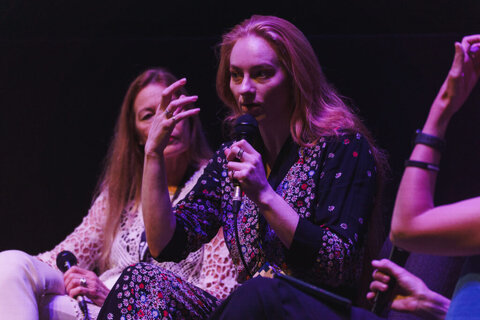
Grace Blest-Hopley
Endometriosis, which affects over 10 million women, still takes an average of eight years to diagnose, while research funding remains significantly lower than for other male-specific conditions.
Chronic pain, which disproportionately affects women, is also frequently under-recognised. Studies have shown that women experience more severe and frequent levels of pain than men and are more likely to report migraines, musculoskeletal pain, and pain from osteoarthritis, rheumatoid arthritis, and fibromyalgia. Despite this, they are typically taken less seriously and are more likely to have their pain discounted.
“The majority of chronic pain is in women, and yet most are not believed when they tell doctors that they’re in pain,” Blest-Hopley added. “It takes a lot longer for women to be given prescription painkillers.”
Many patients say they found relief with cannabis only after the conventional options had been exhausted.
One of those, psychologist Dr Michelle Nyangereka, spoke about her own experiences navigating healthcare as a Black woman and menopause advocate, highlighting the multiple layers of stigma that can shape access to care.
“Accessing medical cannabis as a menopausal Black woman is tough,” she said.
“The stigma doesn’t just add up, it multiplies. You already have the stigma of menopause. Then there’s the stigma around sexual dysfunction. Then, being a Black woman and admitting that you use cannabis.”
Nyangereka added: “Black maternal mortality in the UK is three to four times higher than for white women, and what makes the difference is having a Black doctor. It’s not a question of physiology, it’s a question of whether medicine sees us or not.”
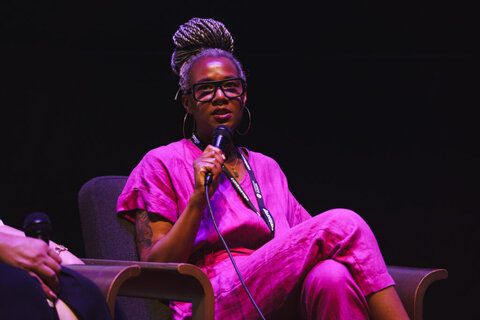
Dr Michelle Nyangereka
These inequalities can create distrust in healthcare systems and encourage women to seek information elsewhere.
According to Nabila Chaudhri, medical director at UK cannabis clinic Alternaleaf, which recently launched the first specific women’s health service, many patients discover medical cannabis through conversations with other women rather than healthcare professionals.
“People come [to the clinic] through people talking to each other,” she said. “Women find solutions within their communities.”
Several conditions were repeatedly identified as areas where cannabinoids may offer particular promise, including endometriosis, chronic pelvic pain, fibromyalgia, PTSD, PMDD, and symptoms associated with perimenopause and menopause.
But the panelists stressed that more research was needed into the long-term safety and effects, and biological mechanisms behind this. A small number of clinical trials are already ongoing, such as an NHS-backed study at the University of Edinburgh, which is investigating the effects of CBD on endometriosis-related pain.
Blest-Hopley argued that understanding the interaction between female hormones and the endocannabinoid system could prove crucial.
“Oestrogen and progesterone dramatically change the tone of the serotonergic system, the glutamatergic system, the dopaminergic system,” she explained.
“They change the way that the endocannabinoid system is expressed. They change the way that anandamide is broken down — all things that are highly relevant to how cannabis then functions in the body.”
Emerging research suggests these hormonal fluctuations may also influence how women respond to cannabis throughout the menstrual cycle, something which researchers at Maastricht University are currently investigating.
“Someone in a follicular phase, about to ovulate, is probably going to feel a much higher sensitivity to THC,” Blest-Hopley said.
“You’re really going to have to think about changing your dose as you go through the cycle.”
One area of women’s healthcare that remains significantly overlooked is sexual function, according to Dr Suzanne Mulvehill, founder of the Women’s Cannabis Project and the Female Orgasm Research Institute.
“First-line treatments are not statistically proven treatments for female orgasm difficulty,” she said.
“The majority of women have no validated treatments. The research shows that cannabis is statistically significant in aiding orgasmic function.”
Last year, following the advocacy efforts of Mulvehill and others, Illinois became the first state to recognise several women’s health conditions, including endometriosis, ovarian cysts, uterine fibroids and female orgasm disorder in its medical cannabis programme.
Yet she has struggled to get states to adopt FOD as a standalone condition.

Dr Suzanne Mulvehill
“When we went specifically for the female orgasm aspect, that was not socially acceptable,” she said. “It’s just too early in our society to see that as a biological function that’s necessary for women.”
She went on to add that it is only in the last three decades that scientists have fully mapped the clitoris, due to an assumption that it is only for pleasure.
“The truth of the matter is, we really don’t understand its purpose and function, ” added Mulvehill, who described the challenges of securing funding for research into female sexual dysfunction and cannabis.
“We need to start looking at this as a normal bodily function that helps regulate us, in order to make some advances.”
Alongside the need for more research, the panel highlighted the importance of having access to more diverse formulations, including products tailored to women’s health conditions and different routes of administration.
Vaginal suppositories, for example, may provide symptom relief without significant psychoactive effects.
“The entire medicinal cannabis industry needs to take a long look in the mirror about whether it wants to be a pharmaceutical industry or a recreational market,” said Blest-Hopley.
“The majority of products that are available are all high-THC flower. If you’ve got to take your kids to school, get home, do the laundry, go to a PTA meeting, get dinner ready, do you really want to be taking a high-THC flower?”
She also stressed that greater education is essential, both for healthcare professionals and patients, particularly around reproductive health.
“We know that the endocannabinoid system is one of the primary regulatory systems—extremely important in utero and during adolescence for our brains to properly grow and structure,” she added.
“Women should not be using cannabis when they’re pregnant or breastfeeding. We need to be teaching people this so that we can prescribe it effectively but, first and foremost, safely.”
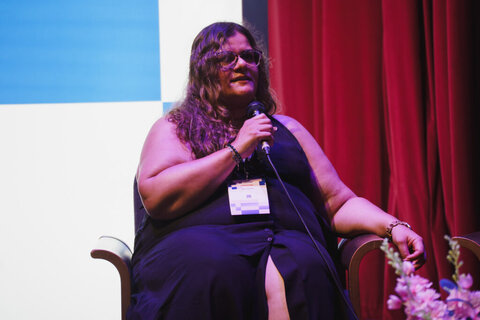
Nabila Chaudri
More research, better education, improved product development, greater representation in clinical trials, and wider policy changes were all identified as priorities if the medical cannabis sector is serious about addressing the gender health gap.
“It’s about making space so we can have conversations like this one,” said Chaudri. “For those who genuinely are benefiting from it to be able to access it in a safe and responsible way.”
But panelists agreed that lived experience should not be dismissed simply because large-scale randomised controlled trials are still lacking, with Nyangereka calling for healthcare professionals and policymakers to pay closer attention to women’s needs.
“Just listen,” she said. “And believe women.”
The post Can Cannabis Help Close the Gender Health Gap? | Cannabis Europa 2026 appeared first on Cannabis Health News.
Continue reading...
But while interest in alternative treatments like cannabis-based medicines continues to grow, so too does a broader conversation about why so many women feel conventional healthcare has failed to meet their needs in the first place.
This was the focus of a panel discussion at Cannabis Europa 2026, where clinicians, researchers, advocates and patients explored whether cannabis could help address some of the longstanding inequalities in women’s healthcare, and what barriers still need to be overcome.
Bringing to the discussion a range of different experiences and backgrounds, there was broad agreement among panelists on one point: clinicians, healthcare industry professionals and wider society all need to listen to women more.
‘Little men’ – a system not designed for women
Many women are seeking alternatives because existing healthcare systems have historically overlooked, under-researched and under-treated many female-specific conditions.
“We’ve had a sort of acknowledgement in Western medicine that women are just little men,” said Dr Grace Blest-Hopley, founder of Hystelica and chief scientific officer at NW Pharma, who argued that many of today’s challenges stem from a long history of women being excluded from medical research.
“We don’t really need to worry about hormones, and all the differences that women have, because it’s not really important… but we’re also going to exclude women from the research, because it’s too much of a variable for us to control.
“It’s been required since 2016 under the FDA that sex is analysed as a biological variable, and it’s still completely ignored.”
Grace Blest-Hopley
Endometriosis, which affects over 10 million women, still takes an average of eight years to diagnose, while research funding remains significantly lower than for other male-specific conditions.
Chronic pain, which disproportionately affects women, is also frequently under-recognised. Studies have shown that women experience more severe and frequent levels of pain than men and are more likely to report migraines, musculoskeletal pain, and pain from osteoarthritis, rheumatoid arthritis, and fibromyalgia. Despite this, they are typically taken less seriously and are more likely to have their pain discounted.
“The majority of chronic pain is in women, and yet most are not believed when they tell doctors that they’re in pain,” Blest-Hopley added. “It takes a lot longer for women to be given prescription painkillers.”
‘Stigma multiplies’ – Why women are looking elsewhere
Many patients say they found relief with cannabis only after the conventional options had been exhausted.
One of those, psychologist Dr Michelle Nyangereka, spoke about her own experiences navigating healthcare as a Black woman and menopause advocate, highlighting the multiple layers of stigma that can shape access to care.
“Accessing medical cannabis as a menopausal Black woman is tough,” she said.
“The stigma doesn’t just add up, it multiplies. You already have the stigma of menopause. Then there’s the stigma around sexual dysfunction. Then, being a Black woman and admitting that you use cannabis.”
Nyangereka added: “Black maternal mortality in the UK is three to four times higher than for white women, and what makes the difference is having a Black doctor. It’s not a question of physiology, it’s a question of whether medicine sees us or not.”
Dr Michelle Nyangereka
These inequalities can create distrust in healthcare systems and encourage women to seek information elsewhere.
According to Nabila Chaudhri, medical director at UK cannabis clinic Alternaleaf, which recently launched the first specific women’s health service, many patients discover medical cannabis through conversations with other women rather than healthcare professionals.
“People come [to the clinic] through people talking to each other,” she said. “Women find solutions within their communities.”
Sensitivity throughout the menstrual cycle
Several conditions were repeatedly identified as areas where cannabinoids may offer particular promise, including endometriosis, chronic pelvic pain, fibromyalgia, PTSD, PMDD, and symptoms associated with perimenopause and menopause.
But the panelists stressed that more research was needed into the long-term safety and effects, and biological mechanisms behind this. A small number of clinical trials are already ongoing, such as an NHS-backed study at the University of Edinburgh, which is investigating the effects of CBD on endometriosis-related pain.
Blest-Hopley argued that understanding the interaction between female hormones and the endocannabinoid system could prove crucial.
“Oestrogen and progesterone dramatically change the tone of the serotonergic system, the glutamatergic system, the dopaminergic system,” she explained.
“They change the way that the endocannabinoid system is expressed. They change the way that anandamide is broken down — all things that are highly relevant to how cannabis then functions in the body.”
Emerging research suggests these hormonal fluctuations may also influence how women respond to cannabis throughout the menstrual cycle, something which researchers at Maastricht University are currently investigating.
“Someone in a follicular phase, about to ovulate, is probably going to feel a much higher sensitivity to THC,” Blest-Hopley said.
“You’re really going to have to think about changing your dose as you go through the cycle.”
Sexual health not ‘socially acceptable’
One area of women’s healthcare that remains significantly overlooked is sexual function, according to Dr Suzanne Mulvehill, founder of the Women’s Cannabis Project and the Female Orgasm Research Institute.
“First-line treatments are not statistically proven treatments for female orgasm difficulty,” she said.
“The majority of women have no validated treatments. The research shows that cannabis is statistically significant in aiding orgasmic function.”
Last year, following the advocacy efforts of Mulvehill and others, Illinois became the first state to recognise several women’s health conditions, including endometriosis, ovarian cysts, uterine fibroids and female orgasm disorder in its medical cannabis programme.
Yet she has struggled to get states to adopt FOD as a standalone condition.
Dr Suzanne Mulvehill
“When we went specifically for the female orgasm aspect, that was not socially acceptable,” she said. “It’s just too early in our society to see that as a biological function that’s necessary for women.”
She went on to add that it is only in the last three decades that scientists have fully mapped the clitoris, due to an assumption that it is only for pleasure.
“The truth of the matter is, we really don’t understand its purpose and function, ” added Mulvehill, who described the challenges of securing funding for research into female sexual dysfunction and cannabis.
“We need to start looking at this as a normal bodily function that helps regulate us, in order to make some advances.”
Male consumers in mind
Alongside the need for more research, the panel highlighted the importance of having access to more diverse formulations, including products tailored to women’s health conditions and different routes of administration.
Vaginal suppositories, for example, may provide symptom relief without significant psychoactive effects.
“The entire medicinal cannabis industry needs to take a long look in the mirror about whether it wants to be a pharmaceutical industry or a recreational market,” said Blest-Hopley.
“The majority of products that are available are all high-THC flower. If you’ve got to take your kids to school, get home, do the laundry, go to a PTA meeting, get dinner ready, do you really want to be taking a high-THC flower?”
She also stressed that greater education is essential, both for healthcare professionals and patients, particularly around reproductive health.
“We know that the endocannabinoid system is one of the primary regulatory systems—extremely important in utero and during adolescence for our brains to properly grow and structure,” she added.
“Women should not be using cannabis when they’re pregnant or breastfeeding. We need to be teaching people this so that we can prescribe it effectively but, first and foremost, safely.”
Nabila Chaudri
‘Believe women’
More research, better education, improved product development, greater representation in clinical trials, and wider policy changes were all identified as priorities if the medical cannabis sector is serious about addressing the gender health gap.
“It’s about making space so we can have conversations like this one,” said Chaudri. “For those who genuinely are benefiting from it to be able to access it in a safe and responsible way.”
But panelists agreed that lived experience should not be dismissed simply because large-scale randomised controlled trials are still lacking, with Nyangereka calling for healthcare professionals and policymakers to pay closer attention to women’s needs.
“Just listen,” she said. “And believe women.”
The post Can Cannabis Help Close the Gender Health Gap? | Cannabis Europa 2026 appeared first on Cannabis Health News.
Continue reading...


