
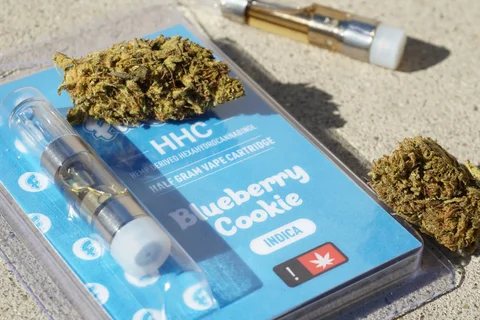
As the federal campaign to clamp down on intoxicating hemp in the US rolls on, the Drug Enforcement Administration (DEA) has officially designated hexahydrocannabinol (HHC) a Schedule I substance.
It marks the latest meaningful effort to bring the largely unregulated ‘intoxicating hemp’ industry to heel following its explosion across the country in the last few years.
The DEA’s formal designation of HHC came just days after the House passed the long overdue Farm, Food and National Security Act 2026, which, despite considerable pressure from the industry, does little to mitigate language set to transform how hemp is regulated.
As the US hemp industry continues to push for amendments to prevent overreach and protect the wider industrial hemp and CBD industries, the Trump administration is substantiating its position on multiple fronts.
On May 04, the DEA gave hexahydrocannabinol (HHC) its own Schedule I controlled substance code, formalising the federal government’s long-stated position that the semi-synthetic cannabinoid has never been legal hemp.
DEA Administrator Terrance Cole signed the HHC rule on 22 April 2026. It assigned drug code 7220 to hexahydrocannabinol, separating it from the umbrella tetrahydrocannabinols listing it had previously sat under.
The agency was explicit that this does not alter HHC’s legal status, given that it has been controlled as a Schedule I substance since it first reached commercial markets, but the separate code now allows the DEA to establish specific production quotas for registered manufacturers pursuing research applications.
The action was triggered by a March 2025 vote at the UN Commission on Narcotic Drugs, which added HHC to Schedule II of the 1971 Convention on Psychotropic Substances (CND Decision 68/5). Under treaty obligations, that decision required a corresponding US listing. The Federal Register notice does not record that the US was the only country to abstain from that vote.
The DEA’s position is that HHC ‘does not occur naturally in the cannabis plant and can only be obtained synthetically, and therefore does not fall under the definition of hemp.’
Days earlier (May 01), the House of Representatives passed the 2026 Farm Bill in a 224–200, replacing the 2018 omnibus agriculture law that largely enabled the so called ‘intoxicating hemp’ market to flourish by defining hemp solely on delta-9 THC content.
Advocates were banking on a bi-partisan amendment, introduced by Representatives James Comer (R-KY) and Morgan Griffith (R-VA), to provide operators with another year to develop a more focused framework, protecting jobs and more accurately singling out bad actors.
In his testimony before the Rules Committee, Rep. Comer noted that the hemp industry supports ‘320,000 American jobs, generates $28.4 billion in market activity, and contributes $1.5 billion in state tax revenue,’ and warned that without action, ‘an entire industry [could be] largely eliminated.’
It’s worth clarifying that the Farm Bill does not delay or revise the crackdown on intoxicating hemp products set in motion in November, which redefines hemp, sets a 0.4mg-per-container total THC cap, and explicitly excludes synthetic and converted cannabinoids.
The legal instrument driving the ban on HHC and its grey-market peers is Section 781 of the government funding bill signed by President Trump on 12 November 2025, legislation that reached the statute book not through open debate but buried in a must-pass continuing resolution that ended a 41-day government shutdown.
That outcome came after the industry had believed it had won. In August 2025, the Senate stripped broadly similar language, proposed by Senate Minority Leader Mitch McConnell and estimated to affect 90-95% of hemp products, from the Agriculture-FDA appropriations bill, after Sen. Rand Paul threatened to block the wider funding bill unless it was removed. The reprieve lasted three months.
The 2026 Farm Bill is a separate vehicle entirely. Its hemp provisions reinforce and embed what the November CR already did at the farming level, thus formally separating ‘industrial hemp’ (fibre, grain, seed) from cannabinoid-linked production, and shifting farm-level testing from a delta-9 THC standard to a total THC measure that closes the THCA loophole.
While both pieces of legislation attempt to accurately differentiate between ‘intoxicating hemp’ substances, industrial hemp, and non-intoxicating cannabinoid products like CBD, its effects have implications for all three.
As cannabis industry analyst Deb Tharp outlined when the CR was signed, during extraction and refinement almost all CBD crude and distillate routinely exceeds 0.3% total THC by weight, even when the finished product does not. ‘Even if your end product is non-intoxicating CBD,’ Tharp said, ‘the stuff in your big stainless steel tank on the way there is suddenly on the wrong side of federal law.’
A Senate version of the Farm Bill is still to come, and competing legislative frameworks remain in play.
Rep. Andy Barr’s Lawful Hemp Protection Act would narrow the cannabinoid market while preserving a lane for wellness CBD.
Elsewhere Sen. Ron Wyden’s Cannabinoid Safety and Regulation Act envisions a broader federally regulated system. A separate bill from Sens. Rand Paul, Amy Klobuchar and Joni Ernst would allow states to opt out of the federal ban entirely, though Ernst has since withdrawn as a co-sponsor without explanation.
The ban itself takes effect on 12 November 2026. For the 320,000 workers and thousands of businesses in the hemp sector, the question is whether Congress can agree a workable framework in the six months remaining, or whether, as the Congressional Research Service implied in December, the federal government will erect the regulatory architecture and leave enforcement, as it has before with cannabis, to circumstance.
The post DEA Formalises HHC Ban as US Farm Bill Offers No Repreive for Cannabinoid Market appeared first on Business of Cannabis.
Continue reading...
It marks the latest meaningful effort to bring the largely unregulated ‘intoxicating hemp’ industry to heel following its explosion across the country in the last few years.
The DEA’s formal designation of HHC came just days after the House passed the long overdue Farm, Food and National Security Act 2026, which, despite considerable pressure from the industry, does little to mitigate language set to transform how hemp is regulated.
As the US hemp industry continues to push for amendments to prevent overreach and protect the wider industrial hemp and CBD industries, the Trump administration is substantiating its position on multiple fronts.
HHC given controlled substance code
On May 04, the DEA gave hexahydrocannabinol (HHC) its own Schedule I controlled substance code, formalising the federal government’s long-stated position that the semi-synthetic cannabinoid has never been legal hemp.
DEA Administrator Terrance Cole signed the HHC rule on 22 April 2026. It assigned drug code 7220 to hexahydrocannabinol, separating it from the umbrella tetrahydrocannabinols listing it had previously sat under.
The agency was explicit that this does not alter HHC’s legal status, given that it has been controlled as a Schedule I substance since it first reached commercial markets, but the separate code now allows the DEA to establish specific production quotas for registered manufacturers pursuing research applications.
The action was triggered by a March 2025 vote at the UN Commission on Narcotic Drugs, which added HHC to Schedule II of the 1971 Convention on Psychotropic Substances (CND Decision 68/5). Under treaty obligations, that decision required a corresponding US listing. The Federal Register notice does not record that the US was the only country to abstain from that vote.
The DEA’s position is that HHC ‘does not occur naturally in the cannabis plant and can only be obtained synthetically, and therefore does not fall under the definition of hemp.’
READ MORE…
DEA Formalises HHC Ban as US Farm Bill Offers No Repreive for Cannabinoid Market
House Agriculture Committee Advances Farm Bill With No Relief for Hemp Industry

What’s in Store for the Global Cannabis Industry in 2026?
The 2026 Farm Bill passes through the House
Days earlier (May 01), the House of Representatives passed the 2026 Farm Bill in a 224–200, replacing the 2018 omnibus agriculture law that largely enabled the so called ‘intoxicating hemp’ market to flourish by defining hemp solely on delta-9 THC content.
Advocates were banking on a bi-partisan amendment, introduced by Representatives James Comer (R-KY) and Morgan Griffith (R-VA), to provide operators with another year to develop a more focused framework, protecting jobs and more accurately singling out bad actors.
In his testimony before the Rules Committee, Rep. Comer noted that the hemp industry supports ‘320,000 American jobs, generates $28.4 billion in market activity, and contributes $1.5 billion in state tax revenue,’ and warned that without action, ‘an entire industry [could be] largely eliminated.’
It’s worth clarifying that the Farm Bill does not delay or revise the crackdown on intoxicating hemp products set in motion in November, which redefines hemp, sets a 0.4mg-per-container total THC cap, and explicitly excludes synthetic and converted cannabinoids.
The legal instrument driving the ban on HHC and its grey-market peers is Section 781 of the government funding bill signed by President Trump on 12 November 2025, legislation that reached the statute book not through open debate but buried in a must-pass continuing resolution that ended a 41-day government shutdown.
That outcome came after the industry had believed it had won. In August 2025, the Senate stripped broadly similar language, proposed by Senate Minority Leader Mitch McConnell and estimated to affect 90-95% of hemp products, from the Agriculture-FDA appropriations bill, after Sen. Rand Paul threatened to block the wider funding bill unless it was removed. The reprieve lasted three months.
The 2026 Farm Bill is a separate vehicle entirely. Its hemp provisions reinforce and embed what the November CR already did at the farming level, thus formally separating ‘industrial hemp’ (fibre, grain, seed) from cannabinoid-linked production, and shifting farm-level testing from a delta-9 THC standard to a total THC measure that closes the THCA loophole.
While both pieces of legislation attempt to accurately differentiate between ‘intoxicating hemp’ substances, industrial hemp, and non-intoxicating cannabinoid products like CBD, its effects have implications for all three.
As cannabis industry analyst Deb Tharp outlined when the CR was signed, during extraction and refinement almost all CBD crude and distillate routinely exceeds 0.3% total THC by weight, even when the finished product does not. ‘Even if your end product is non-intoxicating CBD,’ Tharp said, ‘the stuff in your big stainless steel tank on the way there is suddenly on the wrong side of federal law.’
A Senate version of the Farm Bill is still to come, and competing legislative frameworks remain in play.
Rep. Andy Barr’s Lawful Hemp Protection Act would narrow the cannabinoid market while preserving a lane for wellness CBD.
Elsewhere Sen. Ron Wyden’s Cannabinoid Safety and Regulation Act envisions a broader federally regulated system. A separate bill from Sens. Rand Paul, Amy Klobuchar and Joni Ernst would allow states to opt out of the federal ban entirely, though Ernst has since withdrawn as a co-sponsor without explanation.
The ban itself takes effect on 12 November 2026. For the 320,000 workers and thousands of businesses in the hemp sector, the question is whether Congress can agree a workable framework in the six months remaining, or whether, as the Congressional Research Service implied in December, the federal government will erect the regulatory architecture and leave enforcement, as it has before with cannabis, to circumstance.
The post DEA Formalises HHC Ban as US Farm Bill Offers No Repreive for Cannabinoid Market appeared first on Business of Cannabis.
Continue reading...

