
Written by Oskar Fletcher, Chief Executive of pharmaceutical contract manufacturing operator Blossom Pharma.
Europe’s medical cannabis industry is entering a new phase.
For years, the conversation around the sector was dominated by future potential: patient access, regulatory reform, new markets, international imports and the promise of a more mature medical cannabis framework across Europe.
That potential is now becoming tangible. Germany and the UK both saw their medical cannabis markets more than double in 2025, while Europe’s legal medical cannabis market is being projected at over €1.5bn in 2026.
This is an important moment. But growth on its own is not enough.
As demand increases, the industry’s biggest challenge is shifting. The question is no longer simply whether European patients will access medical cannabis. Increasingly, the question is whether the supply chain behind that access is mature enough, compliant enough and resilient enough to support the market that is now emerging.
In other words, Europe’s medical cannabis market has grown up. Now its supply chain needs to.
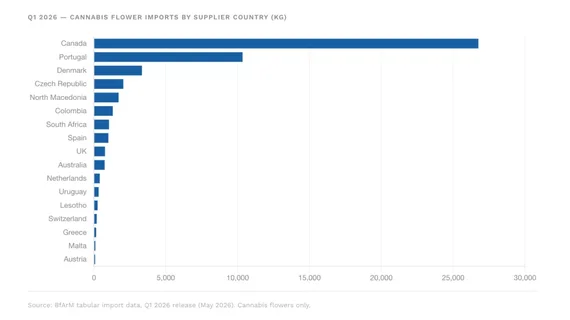
Germany has become the clearest example of what rapid market expansion can look like. Medical cannabis imports into Germany increased dramatically in 2025, with reported import volumes rising from 72.85 tonnes in 2024 to more than 201 tonnes in 2025, based on available BfArM data reported by industry sources.
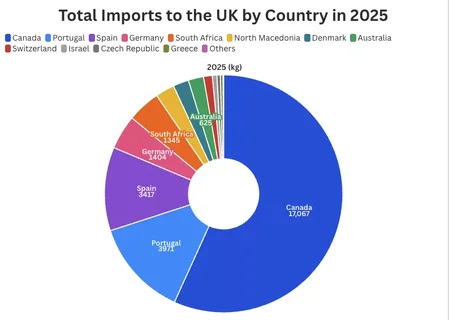
The UK has also moved from being a slow, highly constrained market to one of Europe’s most important growth engines. Prohibition Partners has estimated that the UK became the second-largest medical cannabis market in Europe, with sales expected to surpass €269m in 2025 and an active patient base of around 50,000 to 60,000 patients.
These numbers matter. They show that the industry is no longer dealing only with theoretical demand or small pilot markets. It is now dealing with scale.
But scale exposes weaknesses.
When volumes are small, supply chains can rely on manual workarounds, one-off shipments, loose planning and reactive problem solving. As volumes grow, those approaches break down.
Delays in documentation, testing, import permits, packaging, release or stability data can quickly translate into missed launch windows, lost revenue, stock shortages and damaged relationships with doctors, pharmacies, distributors and patients.
The companies that win in the next phase of European medical cannabis will not be the ones that simply find product. They will be the ones that can move product reliably through a compliant pharmaceutical supply chain.
One of the most common mistakes international operators make is treating Europe as one market. It is not.
Europe is a collection of national medical cannabis systems, each with its own access model, prescribing behaviour, pharmacy structure, regulator expectations, import process and commercial dynamics. Germany is not the UK. The UK is not Poland. Australia is different again. Even when the same product can theoretically serve multiple markets, the route to release, packaging, documentation and distribution may vary significantly.
BofC Intelligence EU Regulation Hub Tracking legal status, market access, and regulatory developments across 28 European countries — with market data from Prohibition Partners.
Explore the hub →
This is why European cannabis infrastructure matters.
A product may be well cultivated. It may have strong genetics, attractive THC levels, good terpene content and competitive pricing. But if the documentation is not right, if the quality system is not robust, if the release pathway is unclear, or if the product cannot be adapted to the specific requirements of each market, it will struggle to scale.
In mature pharmaceutical industries, this is well understood. Product quality is not just what is inside the pack. It is the full chain of custody, evidence, testing, release and traceability that allows regulators, doctors, pharmacies and patients to trust the product.
Medical cannabis, as it should be, is now being forced to meet that same standard.
Much of the public conversation around medical cannabis focuses on market size, patient numbers, prescription growth, THC categories and pricing. These are important topics. But they do not tell the whole story.
Behind every successful product launch sits a chain of operational steps that are less visible but often more decisive:
Any one of these can become a bottleneck.
This is particularly relevant as more international cultivators look to Europe. Many producers have strong cultivation capabilities but underestimate how different the European pharmaceutical framework is from other cannabis markets. A product that is commercially attractive in Canada, Australia, South Africa, Latin America or Africa may still require significant work before it is ready for European medical markets.
The opportunity is real, but so is the complexity.
That complexity is not a bad thing. In fact, it is one of the reasons Europe can become one of the most credible medical cannabis markets globally. High barriers to entry, pharmaceutical standards and strict compliance expectations are what protect patients and create trust.
But those same barriers mean the supply chain needs specialist infrastructure.
As the market matures, independent EU-GMP manufacturing and release capacity will become increasingly strategic.
Not every cultivator should build a European manufacturing site. Not every distributor should try to internalise packaging, release and import/export capability. Not every brand should carry the cost and complexity of building pharmaceutical infrastructure before it has proven demand.
This is where the CMO model becomes important.
In more mature pharmaceutical sectors, contract manufacturing organisations play a critical role. They allow companies to access specialist infrastructure, technical expertise and regulated manufacturing capacity without having to build everything themselves. Medical cannabis is now moving in the same direction.
For cannabis, this is even more important because the market is still fragmented, regulations are evolving, and demand can move quickly between markets. A flexible EU-GMP CMO can help international suppliers and brands bridge the gap between cultivation and compliant market access.
This is also where independence matters.
As more vertically integrated groups compete across cultivation, distribution and brands, some companies will increasingly want neutral infrastructure partners that are not competing directly with them downstream. An independent CMO can support multiple suppliers, distributors and brands without creating the same strategic conflicts.
For Blossom, this has always been a central part of our positioning. We see ourselves not as a competing brand owner, but as a European infrastructure partner helping cultivators, distributors and pharmaceutical companies manufacture, package, release and distribute products through regulated medical cannabis markets.
The rapid growth of Europe’s medical cannabis market will inevitably bring more regulatory scrutiny.
Germany is a good example. Following sharp growth in imports and online access models, the German government moved in 2025 to tighten rules around online cannabis prescribing and mail order sales. Reuters reported that the German cabinet approved regulations requiring face-to-face consultations and limiting distribution to physical pharmacies, citing a surge in imports and concerns around online prescriptions without direct medical contact.
Some may see this as a threat to the market. But it can also be seen as a sign that the sector is maturing.
In any medical market, growth eventually forces regulators to look more closely at access models, prescribing standards, patient safeguards and supply chain controls. That is not unique to cannabis. It is what happens when a sector moves from niche to mainstream.
The companies best positioned for this environment will be those that welcome higher standards rather than resist them.
A more regulated market may be harder to enter, but it is also more sustainable. It rewards companies that invest in quality, documentation, compliance and long-term relationships. It penalises those who rely on shortcuts.
For Europe, that is a positive development.
Ultimately, this is about patients.
A patient who responds well to a prescribed product needs consistency. Doctors need confidence that products will remain available. Pharmacies need reliable supply. Distributors need partners who can meet timelines. Regulators need confidence that standards are being followed.
Stock gaps and inconsistent supply damage trust. So do quality failures, delayed releases, documentation problems and last-minute regulatory surprises.
As the industry grows, the standard for acceptable performance will rise. Patients and healthcare professionals will not judge the sector by its potential. They will judge it by whether products are available, compliant and consistent when needed.
That is why supply chain maturity should be seen as a patient access issue, not just an operational issue.
The first phase of the European cannabis industry rewarded licence acquisition, market entry stories and future growth narratives.
The next phase will reward operators.
That means companies that can execute repeatedly. Companies that can manage complex international supply chains. Companies that understand EU-GMP expectations. Companies that can adapt products for different markets. Companies that can scale without losing control of quality.
This does not mean the industry should become less ambitious. Quite the opposite. Europe has the potential to become one of the most important medical cannabis regions in the world. But that potential will only be realised if the infrastructure behind the market keeps pace with demand.
Capital, brands and genetics will all matter. But so will batch records, import permits, release timelines, validated processes, stability data and quality systems.
These may not be the most glamorous parts of the cannabis industry. But they are the parts that will determine whether the industry can scale sustainably.
Europe’s medical cannabis market is no longer waiting to emerge. It is here.
Germany is scaling. The UK is growing. Other European markets are developing. International producers are looking to enter. Investors are paying attention. Patients are becoming more aware. Doctors and pharmacies are gaining experience.
The opportunity is significant.
But the industry should be clear-eyed about what comes next. Growth will bring pressure. Pressure will expose weak systems. Weak systems will create delays, shortages and compliance risk.
The solution is not simply more product. It is better infrastructure.
Europe now needs a medical cannabis supply chain that matches the maturity of the market it serves: compliant, flexible, transparent, pharmaceutical-grade and built for scale.
That is the next challenge for the industry. And for those of us building that infrastructure, it is also the opportunity.
The post Europe’s Medical Cannabis Market Has Grown Up, Now Its Supply Chain Needs To appeared first on Business of Cannabis.
Continue reading...
Europe’s medical cannabis industry is entering a new phase.
For years, the conversation around the sector was dominated by future potential: patient access, regulatory reform, new markets, international imports and the promise of a more mature medical cannabis framework across Europe.
That potential is now becoming tangible. Germany and the UK both saw their medical cannabis markets more than double in 2025, while Europe’s legal medical cannabis market is being projected at over €1.5bn in 2026.
This is an important moment. But growth on its own is not enough.
As demand increases, the industry’s biggest challenge is shifting. The question is no longer simply whether European patients will access medical cannabis. Increasingly, the question is whether the supply chain behind that access is mature enough, compliant enough and resilient enough to support the market that is now emerging.
In other words, Europe’s medical cannabis market has grown up. Now its supply chain needs to.
Demand is no longer the only challenge
Germany has become the clearest example of what rapid market expansion can look like. Medical cannabis imports into Germany increased dramatically in 2025, with reported import volumes rising from 72.85 tonnes in 2024 to more than 201 tonnes in 2025, based on available BfArM data reported by industry sources.
The UK has also moved from being a slow, highly constrained market to one of Europe’s most important growth engines. Prohibition Partners has estimated that the UK became the second-largest medical cannabis market in Europe, with sales expected to surpass €269m in 2025 and an active patient base of around 50,000 to 60,000 patients.
These numbers matter. They show that the industry is no longer dealing only with theoretical demand or small pilot markets. It is now dealing with scale.
But scale exposes weaknesses.
When volumes are small, supply chains can rely on manual workarounds, one-off shipments, loose planning and reactive problem solving. As volumes grow, those approaches break down.
Delays in documentation, testing, import permits, packaging, release or stability data can quickly translate into missed launch windows, lost revenue, stock shortages and damaged relationships with doctors, pharmacies, distributors and patients.
The companies that win in the next phase of European medical cannabis will not be the ones that simply find product. They will be the ones that can move product reliably through a compliant pharmaceutical supply chain.
Europe is not a single cannabis market
One of the most common mistakes international operators make is treating Europe as one market. It is not.
Europe is a collection of national medical cannabis systems, each with its own access model, prescribing behaviour, pharmacy structure, regulator expectations, import process and commercial dynamics. Germany is not the UK. The UK is not Poland. Australia is different again. Even when the same product can theoretically serve multiple markets, the route to release, packaging, documentation and distribution may vary significantly.
BofC Intelligence EU Regulation Hub Tracking legal status, market access, and regulatory developments across 28 European countries — with market data from Prohibition Partners.
Explore the hub →
This is why European cannabis infrastructure matters.
A product may be well cultivated. It may have strong genetics, attractive THC levels, good terpene content and competitive pricing. But if the documentation is not right, if the quality system is not robust, if the release pathway is unclear, or if the product cannot be adapted to the specific requirements of each market, it will struggle to scale.
In mature pharmaceutical industries, this is well understood. Product quality is not just what is inside the pack. It is the full chain of custody, evidence, testing, release and traceability that allows regulators, doctors, pharmacies and patients to trust the product.
Medical cannabis, as it should be, is now being forced to meet that same standard.
The hidden bottleneck is operational infrastructure
Much of the public conversation around medical cannabis focuses on market size, patient numbers, prescription growth, THC categories and pricing. These are important topics. But they do not tell the whole story.
Behind every successful product launch sits a chain of operational steps that are less visible but often more decisive:
- Supplier qualification
- GACP and GMP alignment
- Import and export permits
- Analytical testing
- Batch documentation
- EU-GMP manufacturing or packaging
- QP release
- Market-specific labelling
- Stability programmes
- Distribution readiness
- Ongoing pharmacopoeia compliance
Any one of these can become a bottleneck.
This is particularly relevant as more international cultivators look to Europe. Many producers have strong cultivation capabilities but underestimate how different the European pharmaceutical framework is from other cannabis markets. A product that is commercially attractive in Canada, Australia, South Africa, Latin America or Africa may still require significant work before it is ready for European medical markets.
The opportunity is real, but so is the complexity.
That complexity is not a bad thing. In fact, it is one of the reasons Europe can become one of the most credible medical cannabis markets globally. High barriers to entry, pharmaceutical standards and strict compliance expectations are what protect patients and create trust.
But those same barriers mean the supply chain needs specialist infrastructure.
Independent EU-GMP manufacturing will become more important.
As the market matures, independent EU-GMP manufacturing and release capacity will become increasingly strategic.
Not every cultivator should build a European manufacturing site. Not every distributor should try to internalise packaging, release and import/export capability. Not every brand should carry the cost and complexity of building pharmaceutical infrastructure before it has proven demand.
This is where the CMO model becomes important.
In more mature pharmaceutical sectors, contract manufacturing organisations play a critical role. They allow companies to access specialist infrastructure, technical expertise and regulated manufacturing capacity without having to build everything themselves. Medical cannabis is now moving in the same direction.
For cannabis, this is even more important because the market is still fragmented, regulations are evolving, and demand can move quickly between markets. A flexible EU-GMP CMO can help international suppliers and brands bridge the gap between cultivation and compliant market access.
This is also where independence matters.
As more vertically integrated groups compete across cultivation, distribution and brands, some companies will increasingly want neutral infrastructure partners that are not competing directly with them downstream. An independent CMO can support multiple suppliers, distributors and brands without creating the same strategic conflicts.
For Blossom, this has always been a central part of our positioning. We see ourselves not as a competing brand owner, but as a European infrastructure partner helping cultivators, distributors and pharmaceutical companies manufacture, package, release and distribute products through regulated medical cannabis markets.
Regulatory pressure is a sign of maturity, not failure
The rapid growth of Europe’s medical cannabis market will inevitably bring more regulatory scrutiny.
Germany is a good example. Following sharp growth in imports and online access models, the German government moved in 2025 to tighten rules around online cannabis prescribing and mail order sales. Reuters reported that the German cabinet approved regulations requiring face-to-face consultations and limiting distribution to physical pharmacies, citing a surge in imports and concerns around online prescriptions without direct medical contact.
Some may see this as a threat to the market. But it can also be seen as a sign that the sector is maturing.
In any medical market, growth eventually forces regulators to look more closely at access models, prescribing standards, patient safeguards and supply chain controls. That is not unique to cannabis. It is what happens when a sector moves from niche to mainstream.
The companies best positioned for this environment will be those that welcome higher standards rather than resist them.
A more regulated market may be harder to enter, but it is also more sustainable. It rewards companies that invest in quality, documentation, compliance and long-term relationships. It penalises those who rely on shortcuts.
For Europe, that is a positive development.
READ MORE…

Europe’s Medical Cannabis Market Has Grown Up, Now Its Supply Chain Needs To

Cannabis News Today — Sunday 1 June 2026: Rescheduling under legal strain as Tennessee confirms THCA deadline

Jersey’s Cannabis Industry Posts First Profit as Exports Triple, But the Real Value Is Still Leaving the Island
Patients need reliability, not just availability
Ultimately, this is about patients.
A patient who responds well to a prescribed product needs consistency. Doctors need confidence that products will remain available. Pharmacies need reliable supply. Distributors need partners who can meet timelines. Regulators need confidence that standards are being followed.
Stock gaps and inconsistent supply damage trust. So do quality failures, delayed releases, documentation problems and last-minute regulatory surprises.
As the industry grows, the standard for acceptable performance will rise. Patients and healthcare professionals will not judge the sector by its potential. They will judge it by whether products are available, compliant and consistent when needed.
That is why supply chain maturity should be seen as a patient access issue, not just an operational issue.
The next phase will reward operators
The first phase of the European cannabis industry rewarded licence acquisition, market entry stories and future growth narratives.
The next phase will reward operators.
That means companies that can execute repeatedly. Companies that can manage complex international supply chains. Companies that understand EU-GMP expectations. Companies that can adapt products for different markets. Companies that can scale without losing control of quality.
This does not mean the industry should become less ambitious. Quite the opposite. Europe has the potential to become one of the most important medical cannabis regions in the world. But that potential will only be realised if the infrastructure behind the market keeps pace with demand.
Capital, brands and genetics will all matter. But so will batch records, import permits, release timelines, validated processes, stability data and quality systems.
These may not be the most glamorous parts of the cannabis industry. But they are the parts that will determine whether the industry can scale sustainably.
A grown-up market needs grown-up infrastructure
Europe’s medical cannabis market is no longer waiting to emerge. It is here.
Germany is scaling. The UK is growing. Other European markets are developing. International producers are looking to enter. Investors are paying attention. Patients are becoming more aware. Doctors and pharmacies are gaining experience.
The opportunity is significant.
But the industry should be clear-eyed about what comes next. Growth will bring pressure. Pressure will expose weak systems. Weak systems will create delays, shortages and compliance risk.
The solution is not simply more product. It is better infrastructure.
Europe now needs a medical cannabis supply chain that matches the maturity of the market it serves: compliant, flexible, transparent, pharmaceutical-grade and built for scale.
That is the next challenge for the industry. And for those of us building that infrastructure, it is also the opportunity.
The post Europe’s Medical Cannabis Market Has Grown Up, Now Its Supply Chain Needs To appeared first on Business of Cannabis.
Continue reading...

