
Last week (April 27), the deadline for Greek industry stakeholders to have their say on a controversial new hemp ban expired.
The proposed legislation would impose a blanket ban on the sale of CBD flowers across the country, placing yet another European Union member state on the front lines of the perpetual ‘Hemp Wars’.
Closely mirroring what is now happening in the US, the new legislation is driven by the rapid spread of loosely regulated ‘intoxicating hemp’ products sold in vending machines and convenience stores across the country.
However, like its transatlantic counterpart, the proposed measures to crack down on these new substances overreach to such an extent that they threaten legal industrial hemp and CBD industries with near-extinction. Unlike the US, however, Greece is bound to EU law.
The Greek industry is confident that this ‘measure appears to conflict with the principle of the free movement of goods’. More pertinently, Greece’s own statutory advisory body found that it ‘moves against the European trend where CBD flower distribution is permitted under specific conditions.’
READ PART 1
The architecture of the problem begins with the 2016 joint ministerial decision that created Greece’s industrial hemp framework.
Grounded in Law 4139/2013, this regulation permitted the cultivation and industrial processing of Cannabis Sativa L varieties with THC content below 0.2% and created a formal exemption from the definition of narcotic substances for raw harvested products.
What it did not explicitly do was authorise the retail sale of hemp flower for human consumption. As the Greek publication parapolitika.gr noted in its coverage of the consultation, the retail CBD flower market developed in the space that the framework left open far faster than the regulation could keep up with.
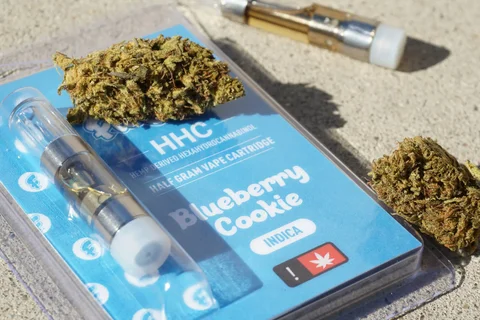
As seen in the US, and much of Europe from around 2022, legal hemp flower, indistinguishable by appearance from high-THC cannabis, was imported and enriched with synthetic cannabinoids, like HHC and its derivatives, creating products with psychoactive effects that sat in a legal grey area.
The Greek state moved against HHC specifically, classifying it as a narcotic in January 2024, before expanding the list of prohibited synthetic cannabinoids in 2025.
The problem, as parapolitika.gr reported, is that the chemical structures of synthetic cannabinoids mutate faster than regulators can track them. “This constant modification makes it extremely difficult, if not practically impossible, to clearly identify and reliably detect them in the context of controls,” the publication noted.
The incident that crystallised political pressure was the hospitalisation of a student from Thessaloniki on a school trip to Ioannina, after consuming semi-synthetic cannabis products.
Under Law 4139/2013, as it currently stands, raw harvested products from hemp with THC up to 0.2% are excluded from the definition of narcotic substances. The proposed bill, under Article 41, would raise the THC limit to 0.3% to bring it in line with wider EU legislation, but introduce a new paragraph 3A that removes dried hemp flower from that exclusion entirely.
“Dried flower derived from the cultivation of Cannabis Sativa L varieties with THC content up to 0.3% and intended for retail sale, distribution and supply to consumers does not constitute a raw harvested product,” the new paragraph stipulates.
As such, the retail sale, distribution, consumer supply, purchase and use of that flower within Greek territory would be declared ‘totally prohibited.’
Import, storage and wholesale supply remain permitted, but only for industrial processing for products like cosmetics, foods, and dietary supplements.
ΥΠΥΓΕΙΑΣDownload
Operators found to be trading hemp flower outside those parameters face fines of up to €100,000, withdrawal of their operating licence, and prison sentences of up to five years under Articles 48 and 49 of the same bill.
Elsewhere, Article 42 simultaneously reduces the fees for pharmaceutical cannabis export production licences from €2,500 to €500 per application.
Articles 45 to 49 create a new class of licensed cannabis product businesses, which will become the only entities permitted to sell any hemp-derived products remaining on the market. These businesses must stand at least 500 metres from schools, register on a national Health Ministry database and submit to inspection by the National Organisation for Medicines.
Greece’s nascent Medical cannabis industry remains untouched by these proposals.
Given that ‘intoxicating hemp’ substances like HHC and Delta 8 are often made from hemp with THC content below 0.3%, or simply sprayed over it, regulators have struggled to construct regulations that are able to effectively rein these new compounds in without severely impacting the industrial hemp industry.
The US is now wrangling with this exact issue, while the Czech Republic remains a global outlier in its efforts to introduce a new category for these substances and regulate them based on their potential harm.
Greece’s proposals fall into the familiar trap of failing to make a distinction between legal, domestically produced hemp flower sold in specialist stores, and the semi-synthetic cannabis products sold in the grey market.
Of the 845 comments submitted across the entire bill during the consultation period, exactly half were directed at Chapter E alone. The cannabis provisions of a health bill nominally about pharmaceutical funding reform had drawn more formal objections than every other section combined.
Georgios Alexandros Velentsas, owner of two CBD stores including one on a tourist island, said in their April 26 submission: “We, like thousands of others in the sector, contribute significant revenues to the Greek state through VAT every month. These revenues will be lost permanently.
“At the same time, any citizen will be able to order the same products without restriction from websites abroad and from other EU countries. So on one hand we are closing hundreds of Greek businesses and losing thousands of jobs, while on the other we leave the market with no quality control, age verification or safety.
“The bill was presented as a reaction to isolated cases of sales to minors. If we follow the same logic, why don’t we move to a blanket ban on alcohol sales in all shops because some people break the law? The right solution is stricter controls and heavy fines on those who break the law, not the elimination of an entire sector.”
Another anonymous business owner said on the same day: “Without many words I will tell you that just from our stores, eight families depend on this income, who, if flower is totally banned, will find themselves without work.
“Ninety per cent of our sales are flower, so in practice we become an unviable business, and along with our investments, eight full-time jobs are lost. We are with you: ban anything synthetic. But natural flower cannot pay the price, and with it, like a domino, thousands of businesses across Greece.”
As we laid out in Part 1, EU member states’ efforts to restrict hemp regularly misunderstand, challenge, or entirely overlook legal precedent that should apply to all 27 member states.
The key case almost all of these legal battles rests upon is the landmark CJEU ruling on the C-663/18 — Kanavape case in November 2020. The court established that CBD is not a narcotic substance, that member states cannot impose blanket marketing bans on CBD products lawfully produced elsewhere in the Union, and that any restriction must be grounded in clear, scientifically substantiated evidence of genuine risk to public health.
Greece’s own Economic and Social Committee, the OKE, the statutory advisory body that reviews draft laws before they reach parliament, concluded in its formal opinion on the bill that it does not.
Assessing Article 41 directly, the OKE found that the measure ‘moves against the European trend where CBD flower distribution is permitted under specific conditions’ and ‘excessively restricts economic activity, squeezing an entire class of retail trade.’
On the specific public health justification, it found that banning domestic retail ‘will not eliminate the distribution of these products but will abolish domestic and controlled retail trade without any overall control of consumer access.’
The OKE’s formal recommendation was to replace the blanket prohibition with enhanced market supervision, strict age limits, traceability across all distribution channels, and substantially higher fines.
Angelos Botsis, Co-Founder of Hempoil, told Business of Cannabis: “The very recent proposed regulation under CHAPTER E (Articles 33–49), which introduces a blanket ban on the sale of CBD flowers in Greece, raises serious concerns regarding both its compatibility with EU law and its broader impact on market competition.
“From a legal perspective, the measure appears to conflict with the principle of the free movement of goods within the European Union… At the same time, the proposed ban effectively excludes an entire existing and legally operating sector, while the pharmaceutical cannabis market continues to develop through limited distribution channels.
“In practice, this raises reasonable concerns about increasing market concentration and the restriction of competition, as a broad category of products is removed while others remain accessible through more controlled pathways.”
Georgios Folias, after consulting a public law specialist, said in his public response to the proposals that the bill is in ‘obvious tension’ with EU law.
“The state itself acknowledges the possibility of a controlled market but removes from it the primary product. This inconsistency will make it difficult to justify the regulation before judicial review.
“If the public health risk comes primarily from synthetic and semi-synthetic products, as documented explicitly by the European Monitoring Centre for Drugs, the ban on natural low-THC flower does not address the actual area of risk. Multiple less restrictive and equally appropriate measures exist: laboratory analyses per batch, distribution only from licensed points, digital age verification, autonomous treatment of synthetics. These do not appear to have been exhausted before the blanket ban was chosen.”
The bill was formally tabled in the Hellenic Parliament on 5 May 2026. It now moves to committee stage before a plenary vote, carrying Article 41 inside a broader health bill whose headline provision, the Drug Innovation Fund, has its own political momentum.
This complicates the path to amendments in favour of the hemp industry, as changes to a single chapter of an omnibus bill require a political decision to disaggregate what the government has chosen to bundle together.
The most immediately actionable legal tool potentially available to Greek operators is the fact that the government appears to have introduced Article 41 without filing the required notification under Directive 2015/1535/EU, the Technical Regulations Information System, or TRIS, which obliges member states to notify the Commission of draft technical regulations before enactment, triggering a mandatory standstill period.
Business of Cannabis searched the TRIS database for Greek notifications throughout 2025 and 2026 and found no notification relating to the bill or its cannabis provisions.
Italy’s hemp industry raised the same procedural argument in its 2024 complaint to the Commission with sufficient merit for the Commission to formally examine it.
In November 2025, Italy’s Council of State referred two questions to the EUCJ, requesting clarification on whether EU agricultural law precludes a member state ban on compliant hemp parts, and whether such a ban can be justified when THC content is minimal and scientific evidence of harm is absent.
A ruling, expected no earlier than late 2026, would give Greek operators an immediate basis to challenge any enacted restriction in domestic courts, without needing to begin their own referral process from scratch.
Whether any of that changes the outcome is, at this point, a political question as much as a legal one.
The post Greece Moves to Ban Hemp Flower Sales, Despite Government Advisory Body Warning of ‘Conflict’ With EU Law appeared first on Business of Cannabis.
Continue reading...
The proposed legislation would impose a blanket ban on the sale of CBD flowers across the country, placing yet another European Union member state on the front lines of the perpetual ‘Hemp Wars’.
Closely mirroring what is now happening in the US, the new legislation is driven by the rapid spread of loosely regulated ‘intoxicating hemp’ products sold in vending machines and convenience stores across the country.
However, like its transatlantic counterpart, the proposed measures to crack down on these new substances overreach to such an extent that they threaten legal industrial hemp and CBD industries with near-extinction. Unlike the US, however, Greece is bound to EU law.
The Greek industry is confident that this ‘measure appears to conflict with the principle of the free movement of goods’. More pertinently, Greece’s own statutory advisory body found that it ‘moves against the European trend where CBD flower distribution is permitted under specific conditions.’
READ PART 1
Intoxicating hemp’s runaway growth
The architecture of the problem begins with the 2016 joint ministerial decision that created Greece’s industrial hemp framework.
Grounded in Law 4139/2013, this regulation permitted the cultivation and industrial processing of Cannabis Sativa L varieties with THC content below 0.2% and created a formal exemption from the definition of narcotic substances for raw harvested products.
What it did not explicitly do was authorise the retail sale of hemp flower for human consumption. As the Greek publication parapolitika.gr noted in its coverage of the consultation, the retail CBD flower market developed in the space that the framework left open far faster than the regulation could keep up with.
As seen in the US, and much of Europe from around 2022, legal hemp flower, indistinguishable by appearance from high-THC cannabis, was imported and enriched with synthetic cannabinoids, like HHC and its derivatives, creating products with psychoactive effects that sat in a legal grey area.
The Greek state moved against HHC specifically, classifying it as a narcotic in January 2024, before expanding the list of prohibited synthetic cannabinoids in 2025.
The problem, as parapolitika.gr reported, is that the chemical structures of synthetic cannabinoids mutate faster than regulators can track them. “This constant modification makes it extremely difficult, if not practically impossible, to clearly identify and reliably detect them in the context of controls,” the publication noted.
The incident that crystallised political pressure was the hospitalisation of a student from Thessaloniki on a school trip to Ioannina, after consuming semi-synthetic cannabis products.
READ MORE…

Greece Moves to Ban Hemp Flower Sales, Despite Government Advisory Body Warning of ‘Conflict’ With EU Law
DEA Formalises HHC Ban as US Farm Bill Offers No Repreive for Cannabinoid Market

The War on Europe’s Legal Hemp Industry
What the proposals will actually do
Under Law 4139/2013, as it currently stands, raw harvested products from hemp with THC up to 0.2% are excluded from the definition of narcotic substances. The proposed bill, under Article 41, would raise the THC limit to 0.3% to bring it in line with wider EU legislation, but introduce a new paragraph 3A that removes dried hemp flower from that exclusion entirely.
“Dried flower derived from the cultivation of Cannabis Sativa L varieties with THC content up to 0.3% and intended for retail sale, distribution and supply to consumers does not constitute a raw harvested product,” the new paragraph stipulates.
As such, the retail sale, distribution, consumer supply, purchase and use of that flower within Greek territory would be declared ‘totally prohibited.’
Import, storage and wholesale supply remain permitted, but only for industrial processing for products like cosmetics, foods, and dietary supplements.
ΥΠΥΓΕΙΑΣDownload
Operators found to be trading hemp flower outside those parameters face fines of up to €100,000, withdrawal of their operating licence, and prison sentences of up to five years under Articles 48 and 49 of the same bill.
Elsewhere, Article 42 simultaneously reduces the fees for pharmaceutical cannabis export production licences from €2,500 to €500 per application.
Articles 45 to 49 create a new class of licensed cannabis product businesses, which will become the only entities permitted to sell any hemp-derived products remaining on the market. These businesses must stand at least 500 metres from schools, register on a national Health Ministry database and submit to inspection by the National Organisation for Medicines.
Greece’s nascent Medical cannabis industry remains untouched by these proposals.
Two markets, one ban
Given that ‘intoxicating hemp’ substances like HHC and Delta 8 are often made from hemp with THC content below 0.3%, or simply sprayed over it, regulators have struggled to construct regulations that are able to effectively rein these new compounds in without severely impacting the industrial hemp industry.
The US is now wrangling with this exact issue, while the Czech Republic remains a global outlier in its efforts to introduce a new category for these substances and regulate them based on their potential harm.
Greece’s proposals fall into the familiar trap of failing to make a distinction between legal, domestically produced hemp flower sold in specialist stores, and the semi-synthetic cannabis products sold in the grey market.
Of the 845 comments submitted across the entire bill during the consultation period, exactly half were directed at Chapter E alone. The cannabis provisions of a health bill nominally about pharmaceutical funding reform had drawn more formal objections than every other section combined.
Georgios Alexandros Velentsas, owner of two CBD stores including one on a tourist island, said in their April 26 submission: “We, like thousands of others in the sector, contribute significant revenues to the Greek state through VAT every month. These revenues will be lost permanently.
“At the same time, any citizen will be able to order the same products without restriction from websites abroad and from other EU countries. So on one hand we are closing hundreds of Greek businesses and losing thousands of jobs, while on the other we leave the market with no quality control, age verification or safety.
“The bill was presented as a reaction to isolated cases of sales to minors. If we follow the same logic, why don’t we move to a blanket ban on alcohol sales in all shops because some people break the law? The right solution is stricter controls and heavy fines on those who break the law, not the elimination of an entire sector.”
Another anonymous business owner said on the same day: “Without many words I will tell you that just from our stores, eight families depend on this income, who, if flower is totally banned, will find themselves without work.
“Ninety per cent of our sales are flower, so in practice we become an unviable business, and along with our investments, eight full-time jobs are lost. We are with you: ban anything synthetic. But natural flower cannot pay the price, and with it, like a domino, thousands of businesses across Greece.”
The EU law problem
As we laid out in Part 1, EU member states’ efforts to restrict hemp regularly misunderstand, challenge, or entirely overlook legal precedent that should apply to all 27 member states.
The key case almost all of these legal battles rests upon is the landmark CJEU ruling on the C-663/18 — Kanavape case in November 2020. The court established that CBD is not a narcotic substance, that member states cannot impose blanket marketing bans on CBD products lawfully produced elsewhere in the Union, and that any restriction must be grounded in clear, scientifically substantiated evidence of genuine risk to public health.
Greece’s own Economic and Social Committee, the OKE, the statutory advisory body that reviews draft laws before they reach parliament, concluded in its formal opinion on the bill that it does not.
Assessing Article 41 directly, the OKE found that the measure ‘moves against the European trend where CBD flower distribution is permitted under specific conditions’ and ‘excessively restricts economic activity, squeezing an entire class of retail trade.’
On the specific public health justification, it found that banning domestic retail ‘will not eliminate the distribution of these products but will abolish domestic and controlled retail trade without any overall control of consumer access.’
The OKE’s formal recommendation was to replace the blanket prohibition with enhanced market supervision, strict age limits, traceability across all distribution channels, and substantially higher fines.
Angelos Botsis, Co-Founder of Hempoil, told Business of Cannabis: “The very recent proposed regulation under CHAPTER E (Articles 33–49), which introduces a blanket ban on the sale of CBD flowers in Greece, raises serious concerns regarding both its compatibility with EU law and its broader impact on market competition.
“From a legal perspective, the measure appears to conflict with the principle of the free movement of goods within the European Union… At the same time, the proposed ban effectively excludes an entire existing and legally operating sector, while the pharmaceutical cannabis market continues to develop through limited distribution channels.
“In practice, this raises reasonable concerns about increasing market concentration and the restriction of competition, as a broad category of products is removed while others remain accessible through more controlled pathways.”
Georgios Folias, after consulting a public law specialist, said in his public response to the proposals that the bill is in ‘obvious tension’ with EU law.
“The state itself acknowledges the possibility of a controlled market but removes from it the primary product. This inconsistency will make it difficult to justify the regulation before judicial review.
“If the public health risk comes primarily from synthetic and semi-synthetic products, as documented explicitly by the European Monitoring Centre for Drugs, the ban on natural low-THC flower does not address the actual area of risk. Multiple less restrictive and equally appropriate measures exist: laboratory analyses per batch, distribution only from licensed points, digital age verification, autonomous treatment of synthetics. These do not appear to have been exhausted before the blanket ban was chosen.”
What next for Greece?
The bill was formally tabled in the Hellenic Parliament on 5 May 2026. It now moves to committee stage before a plenary vote, carrying Article 41 inside a broader health bill whose headline provision, the Drug Innovation Fund, has its own political momentum.
This complicates the path to amendments in favour of the hemp industry, as changes to a single chapter of an omnibus bill require a political decision to disaggregate what the government has chosen to bundle together.
The most immediately actionable legal tool potentially available to Greek operators is the fact that the government appears to have introduced Article 41 without filing the required notification under Directive 2015/1535/EU, the Technical Regulations Information System, or TRIS, which obliges member states to notify the Commission of draft technical regulations before enactment, triggering a mandatory standstill period.
Business of Cannabis searched the TRIS database for Greek notifications throughout 2025 and 2026 and found no notification relating to the bill or its cannabis provisions.
Italy’s hemp industry raised the same procedural argument in its 2024 complaint to the Commission with sufficient merit for the Commission to formally examine it.
In November 2025, Italy’s Council of State referred two questions to the EUCJ, requesting clarification on whether EU agricultural law precludes a member state ban on compliant hemp parts, and whether such a ban can be justified when THC content is minimal and scientific evidence of harm is absent.
A ruling, expected no earlier than late 2026, would give Greek operators an immediate basis to challenge any enacted restriction in domestic courts, without needing to begin their own referral process from scratch.
Whether any of that changes the outcome is, at this point, a political question as much as a legal one.
The post Greece Moves to Ban Hemp Flower Sales, Despite Government Advisory Body Warning of ‘Conflict’ With EU Law appeared first on Business of Cannabis.
Continue reading...

