
After two years of speculation, rumours, stock swings, broken promises, and political theatre, President Donald Trump officially signed an executive order (EO) to push cannabis rescheduling through on Thursday (December 1 .
.
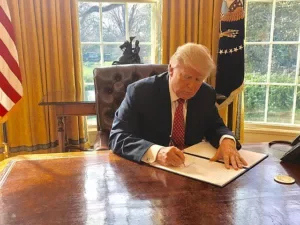
Amid a wave of excitement that the bureaucratic quagmire could finally be overcome, Trump made good on promises made earlier this week and signed an EO instructing federal agencies to move cannabis from Schedule I to Schedule III of the Controlled Substances Act (CSA).
Regardless of the underlying motivations, whether a move to claw back youth votes ahead of the midterms or a genuine philosophical position, Trump’s move will stand as one of the most significant drug reform initiatives in US history, set to have ramifications for cannabis across the globe for years to come.
The long-term implications for global drug reform are hard to predict, but the jubilation across the global cannabis industry is deserved. Tax relief for US companies is a major factor, one that has largely driven a spike in MSO and LP’s stock prices. Yet, the formal acknowledgement that cannabis has accepted medical use by the US government could transform the medical sector, will open the door for clinical research that the sector has been calling out for since its inception.
Stephen Murphy, CEO of Prohibition Partners, said that this represents a ‘historic pivot’ in US drug policy, sending a critical signal to regulators across the globe.
“It removes cannabis from the most restrictive category of the Controlled Substances Act and formally acknowledges its medical use under federal law.
“The deeper significance lies in the signal it sends to regulators, researchers, and the global medical community. Beyond tax relief, rescheduling cannabis to Schedule III signals a seismic shift in how the US federal government approaches cannabis research. For decades, researchers have faced bureaucratic dead ends, limited access to quality study material, and overwhelming restrictions tied to cannabis’s Schedule I status.
“Reclassification will lower these barriers, enabling clinical trials, longitudinal studies, and evidence-based standards of care. In effect, it opens the door for universities, hospitals, and pharmaceutical companies to treat cannabis as a legitimate therapeutic compound, potentially fast-tracking FDA-approved treatments and reshaping global perceptions of medical cannabis.”
The executive order, titled ‘Increasing Medical Marijuana and Cannabidiol Research,’ is more narrowly focused than much of the speculation that preceded it, containing three primary directives rather than the sweeping reforms many had anticipated.
While this does not bypass existing legal procedures, the order specifies the AG must act ‘in accordance with Federal law,’ meaning the DEA’s formal rulemaking process remains in place, agencies are now directed to move ‘in the most expeditious manner’, meaning the static process should begin moving forward, and quickly.
The order also instructs the White House Deputy Chief of Staff for Legislative, Political, and Public Affairs to work with Congress on updating the statutory definition of hemp-derived cannabinoid products. This provision aims to ‘allow Americans to benefit from access to appropriate full-spectrum CBD products while preserving Congress’s intent to restrict the sale of products that pose serious health risks.’
Furthermore, the directive includes consultation with executive agencies to develop a regulatory framework that would establish ‘guidance on an upper limit on milligrams of THC per serving with considerations on per container limits and CBD to THC ratio requirements’, effectively creating a tiered system that distinguishes between low-dose wellness products and higher-potency intoxicating products.
Finally, the order directs HHS, FDA, CMS, and NIH to develop research methods utilising ‘real-world evidence’ to improve access to hemp-derived cannabinoid products and inform standards of care.
The White House fact sheet accompanying the order emphasised the medical rationale, noting that more than 30,000 licensed healthcare practitioners across 43 jurisdictions are authorised to recommend medical marijuana to over six million registered patients for at least 15 medical conditions.
The FDA’s 2023 review found credible scientific support for cannabis use in treating pain, anorexia related to medical conditions, and chemotherapy-induced nausea and vomiting.
Notably absent from the executive order was any mention of the SAFER Banking Act, federal clemency provisions for cannabis convictions, or direct mandates for Medicare CBD coverage.
A $500 annual CBD reimbursement pilot for seniors over 65 is expected to begin next year, though this appears to be a separate administrative initiative rather than a component of the executive order itself.
During the signing ceremony, attended by health officials, physicians, researchers, and veterans advocates, the decision was framed as responding to overwhelming public support, citing polling data showing 82% of Americans favour rescheduling.
The most tangible and immediate impact of rescheduling is relief from IRS Code 280E, which arrives at a critical moment for an industry whose profit margins have been steadily eroded over the past four years.
According to data from Headset, which tracks retail cannabis transactions across the United States, gross margins in the sector have compressed by nearly 10 percentage points since 2021, falling from an average of 52.6% to 42.7% in 2025. During some months in 2025, margins fell as low as 37.5%.
Under 280E, which prevents businesses handling Schedule I or II substances from deducting standard operating expenses such as rent, payroll, and compliance costs, cannabis retailers are effectively taxed on gross profit rather than actual operating profit. Headset’s estimates suggest this creates a median federal tax burden of approximately $268,000 per store per year nationwide. In high-volume states like Maryland, that figure reaches $805,000 per store annually.
Its analysis found that in 11 of 24 states, the median cannabis retailer’s modelled after-tax profit under 280E is negative, meaning the federal tax burden often exceeds the store’s entire net operating profit.
If 280E restrictions are removed following rescheduling, Headset estimates the industry could see between $1.6 billion and $2.2 billion in incremental after-tax cash flow annually at current sales levels. That capital would likely flow toward stabilisation, keeping stores open, restoring inventory levels, and potentially rehiring staff cut during years of margin compression.
However, Deb Tharp, a cannabis policy expert and regular Business of Cannabis contributor, warns that the industry’s focus on 280E relief may be misplaced.
“Schedule 280E benefits won’t do legacy companies any good if they get caught up in a regulatory quagmire,” Tharp said. “Industry pundits are assuming state legacy markets will be allowed to continue as is.”
Data: Finnhub (price/name) + Twelve Data (history). Cached ~
Updated 8 hours ago ↻ Refresh Data: Finnhub (price/name) + Twelve Data (history). Cached ~6h.
Tharp argues the industry is about to face ‘unprecedented regulatory capture over the next five years from competing interests in the pharmaceutical and beverage industries,’ with most cannabis operators unprepared for the shift.
“The companies that will still be operating ten years from now will be the ones that learn how to navigate these fields, something that most cannabis companies are not prepared for as they have traditionally operated outside of the regulated space and have struggled to adapt to state regulations,” she said. “I’ve watched it play out for three decades at the state level, and watched as industry opponents make their case for regressive policies.”
“Companies that want to survive need to concentrate on hiring FDA regulatory experts, supply chain/GMP consultants—because pharma and alcohol will push for tighter controls for regulatory capture—lobbying pros to push back, data analytics and AI compliance experts, and above all else, corporate finance experts. The smart ones already have them on staff.”
While the immediate effects of Trump’s executive order are concentrated in the United States, the international ramifications, particularly for Europe’s rapidly evolving medical cannabis sector, could be substantial.
Ludovic Rachou, president of UIVEC, a French medical cannabis industry association, said the decision ‘sends a strong political signal in favor of medical cannabis’ with impacts that could extend ‘far beyond the United States, particularly in Europe, in terms of research, investment, and the structuring of pharmaceutical supply chains.’
Rachou noted that Europe could become ‘an area of increased interest for American investors and industrial partners’ as US-based operators and pharmaceutical companies seek markets with established regulatory frameworks and access to healthcare reimbursement systems.
“It is essential that Europe anticipates these dynamics and continues to build a clear, science-based framework centred on patients’ needs,” Rachou said, warning that failing to prepare for increased US interest could leave European markets vulnerable to fragmented or inconsistent approaches.
The formal US federal acknowledgement that cannabis has accepted medical use may also accelerate regulatory discussions in countries that have hesitated to develop frameworks, particularly as American institutional capital and pharmaceutical expertise begin flowing toward international markets where regulatory clarity exists.
This is undoubtedly the most significant regulatory story of 2025, and is certain to dominate the discourse throughout 2026. Business of Cannabis will continue to follow this story closely in the new year.

December 18, 2025 No Comments

December 17, 2025 No Comments
December 16, 2025 No Comments
The post Cannabis Rescheduling is Here: Trump Signs Executive Order to Move Cannabis to Schedule III appeared first on Business of Cannabis.
Continue reading...
.Amid a wave of excitement that the bureaucratic quagmire could finally be overcome, Trump made good on promises made earlier this week and signed an EO instructing federal agencies to move cannabis from Schedule I to Schedule III of the Controlled Substances Act (CSA).
Regardless of the underlying motivations, whether a move to claw back youth votes ahead of the midterms or a genuine philosophical position, Trump’s move will stand as one of the most significant drug reform initiatives in US history, set to have ramifications for cannabis across the globe for years to come.
The long-term implications for global drug reform are hard to predict, but the jubilation across the global cannabis industry is deserved. Tax relief for US companies is a major factor, one that has largely driven a spike in MSO and LP’s stock prices. Yet, the formal acknowledgement that cannabis has accepted medical use by the US government could transform the medical sector, will open the door for clinical research that the sector has been calling out for since its inception.
Stephen Murphy, CEO of Prohibition Partners, said that this represents a ‘historic pivot’ in US drug policy, sending a critical signal to regulators across the globe.
“It removes cannabis from the most restrictive category of the Controlled Substances Act and formally acknowledges its medical use under federal law.
“The deeper significance lies in the signal it sends to regulators, researchers, and the global medical community. Beyond tax relief, rescheduling cannabis to Schedule III signals a seismic shift in how the US federal government approaches cannabis research. For decades, researchers have faced bureaucratic dead ends, limited access to quality study material, and overwhelming restrictions tied to cannabis’s Schedule I status.
“Reclassification will lower these barriers, enabling clinical trials, longitudinal studies, and evidence-based standards of care. In effect, it opens the door for universities, hospitals, and pharmaceutical companies to treat cannabis as a legitimate therapeutic compound, potentially fast-tracking FDA-approved treatments and reshaping global perceptions of medical cannabis.”
What the executive order actually does
The executive order, titled ‘Increasing Medical Marijuana and Cannabidiol Research,’ is more narrowly focused than much of the speculation that preceded it, containing three primary directives rather than the sweeping reforms many had anticipated.
While this does not bypass existing legal procedures, the order specifies the AG must act ‘in accordance with Federal law,’ meaning the DEA’s formal rulemaking process remains in place, agencies are now directed to move ‘in the most expeditious manner’, meaning the static process should begin moving forward, and quickly.
The order also instructs the White House Deputy Chief of Staff for Legislative, Political, and Public Affairs to work with Congress on updating the statutory definition of hemp-derived cannabinoid products. This provision aims to ‘allow Americans to benefit from access to appropriate full-spectrum CBD products while preserving Congress’s intent to restrict the sale of products that pose serious health risks.’
Furthermore, the directive includes consultation with executive agencies to develop a regulatory framework that would establish ‘guidance on an upper limit on milligrams of THC per serving with considerations on per container limits and CBD to THC ratio requirements’, effectively creating a tiered system that distinguishes between low-dose wellness products and higher-potency intoxicating products.
Finally, the order directs HHS, FDA, CMS, and NIH to develop research methods utilising ‘real-world evidence’ to improve access to hemp-derived cannabinoid products and inform standards of care.
The White House fact sheet accompanying the order emphasised the medical rationale, noting that more than 30,000 licensed healthcare practitioners across 43 jurisdictions are authorised to recommend medical marijuana to over six million registered patients for at least 15 medical conditions.
The FDA’s 2023 review found credible scientific support for cannabis use in treating pain, anorexia related to medical conditions, and chemotherapy-induced nausea and vomiting.
Notably absent from the executive order was any mention of the SAFER Banking Act, federal clemency provisions for cannabis convictions, or direct mandates for Medicare CBD coverage.
A $500 annual CBD reimbursement pilot for seniors over 65 is expected to begin next year, though this appears to be a separate administrative initiative rather than a component of the executive order itself.
During the signing ceremony, attended by health officials, physicians, researchers, and veterans advocates, the decision was framed as responding to overwhelming public support, citing polling data showing 82% of Americans favour rescheduling.
Immediate implications
The most tangible and immediate impact of rescheduling is relief from IRS Code 280E, which arrives at a critical moment for an industry whose profit margins have been steadily eroded over the past four years.
According to data from Headset, which tracks retail cannabis transactions across the United States, gross margins in the sector have compressed by nearly 10 percentage points since 2021, falling from an average of 52.6% to 42.7% in 2025. During some months in 2025, margins fell as low as 37.5%.
Under 280E, which prevents businesses handling Schedule I or II substances from deducting standard operating expenses such as rent, payroll, and compliance costs, cannabis retailers are effectively taxed on gross profit rather than actual operating profit. Headset’s estimates suggest this creates a median federal tax burden of approximately $268,000 per store per year nationwide. In high-volume states like Maryland, that figure reaches $805,000 per store annually.
Its analysis found that in 11 of 24 states, the median cannabis retailer’s modelled after-tax profit under 280E is negative, meaning the federal tax burden often exceeds the store’s entire net operating profit.
If 280E restrictions are removed following rescheduling, Headset estimates the industry could see between $1.6 billion and $2.2 billion in incremental after-tax cash flow annually at current sales levels. That capital would likely flow toward stabilisation, keeping stores open, restoring inventory levels, and potentially rehiring staff cut during years of margin compression.
However, Deb Tharp, a cannabis policy expert and regular Business of Cannabis contributor, warns that the industry’s focus on 280E relief may be misplaced.
“Schedule 280E benefits won’t do legacy companies any good if they get caught up in a regulatory quagmire,” Tharp said. “Industry pundits are assuming state legacy markets will be allowed to continue as is.”
US Multi-State Operators (MSOs)
| Ticker | Name | Price | 10D % Change | 10D Sparkline | 100D % Change | 100D Sparkline |
|---|---|---|---|---|---|---|
| AYRWF |  Ayr Wellness Inc AYRWF Ayr Wellness Inc AYRWFExchange: CANADIAN NATIONAL STOCK EXCHANGE Currency: USD Market cap: 18.11B | 0.05 | +315.38% | -68.42% | ||
| VRNOF |  Verano Holdings Corp VRNOF Verano Holdings Corp VRNOFExchange: AEQUITAS NEO EXCHANGE Currency: USD Market cap: 2,170.08B | 0.92 | +79.44% | +190.00% | ||
| CURLF |  Curaleaf Holdings Inc CURLF Curaleaf Holdings Inc CURLFExchange: TORONTO STOCK EXCHANGE Currency: USD Market cap: 4,810.47B | 4.70 | +76.69% | +237.89% | ||
| TCNNF |  Trulieve Cannabis Corp TCNNF Trulieve Cannabis Corp TCNNFExchange: CANADIAN NATIONAL STOCK EXCHANGE Currency: USD Market cap: 2,771.80B | 11.12 | +79.13% | +142.09% | ||
| CRLBF |  Cresco Labs Inc CRLBF Cresco Labs Inc CRLBFExchange: CANADIAN NATIONAL STOCK EXCHANGE Currency: USD Market cap: 1,076.71B | 1.92 | +120.23% | +219.33% | ||
| GTBIF |  Green Thumb Industries Inc GTBIF Green Thumb Industries Inc GTBIFExchange: CANADIAN NATIONAL STOCK EXCHANGE Currency: USD Market cap: 3,013.30B | 9.58 | +20.51% | +35.19% | ||
| TSNDF |  Terrascend Corp TSNDF Terrascend Corp TSNDFExchange: TORONTO STOCK EXCHANGE Currency: USD Market cap: 568.22B | 1.32 | +127.98% | +206.98% | ||
| AAWH |  Ascend Wellness Holdings Inc AAWH Ascend Wellness Holdings Inc AAWHExchange: CANADIAN NATIONAL STOCK EXCHANGE Currency: USD Market cap: 200.31B | 1.08 | +89.47% | +156.53% | ||
| JUSHF |  Jushi Holdings Inc JUSHF Jushi Holdings Inc JUSHFExchange: CANADIAN NATIONAL STOCK EXCHANGE Currency: USD Market cap: 232.10B | 0.84 | +73.20% | +54.13% | ||
| VEXTF |  Vext Science Inc VEXTF Vext Science Inc VEXTFExchange: CANADIAN NATIONAL STOCK EXCHANGE Currency: USD Market cap: 74.31B | 0.22 | +19.44% | +51.41% | ||
| GLASF |  Glass House Brands Inc GLASF Glass House Brands Inc GLASFExchange: AEQUITAS NEO EXCHANGE Currency: USD Market cap: 528.00B | 9.55 | +44.26% | +81.90% | ||
| HITI |  High Tide Inc HITI High Tide Inc HITIExchange: TSX VENTURE EXCHANGE - NEX Currency: CAD Market cap: 346.70B | 2.80 | +11.55% | +32.08% |
Updated 8 hours ago ↻ Refresh Data: Finnhub (price/name) + Twelve Data (history). Cached ~6h.
Tharp argues the industry is about to face ‘unprecedented regulatory capture over the next five years from competing interests in the pharmaceutical and beverage industries,’ with most cannabis operators unprepared for the shift.
“The companies that will still be operating ten years from now will be the ones that learn how to navigate these fields, something that most cannabis companies are not prepared for as they have traditionally operated outside of the regulated space and have struggled to adapt to state regulations,” she said. “I’ve watched it play out for three decades at the state level, and watched as industry opponents make their case for regressive policies.”
“Companies that want to survive need to concentrate on hiring FDA regulatory experts, supply chain/GMP consultants—because pharma and alcohol will push for tighter controls for regulatory capture—lobbying pros to push back, data analytics and AI compliance experts, and above all else, corporate finance experts. The smart ones already have them on staff.”
International implications: Europe braced for US-led momentum
While the immediate effects of Trump’s executive order are concentrated in the United States, the international ramifications, particularly for Europe’s rapidly evolving medical cannabis sector, could be substantial.
Ludovic Rachou, president of UIVEC, a French medical cannabis industry association, said the decision ‘sends a strong political signal in favor of medical cannabis’ with impacts that could extend ‘far beyond the United States, particularly in Europe, in terms of research, investment, and the structuring of pharmaceutical supply chains.’
Rachou noted that Europe could become ‘an area of increased interest for American investors and industrial partners’ as US-based operators and pharmaceutical companies seek markets with established regulatory frameworks and access to healthcare reimbursement systems.
“It is essential that Europe anticipates these dynamics and continues to build a clear, science-based framework centred on patients’ needs,” Rachou said, warning that failing to prepare for increased US interest could leave European markets vulnerable to fragmented or inconsistent approaches.
The formal US federal acknowledgement that cannabis has accepted medical use may also accelerate regulatory discussions in countries that have hesitated to develop frameworks, particularly as American institutional capital and pharmaceutical expertise begin flowing toward international markets where regulatory clarity exists.
This is undoubtedly the most significant regulatory story of 2025, and is certain to dominate the discourse throughout 2026. Business of Cannabis will continue to follow this story closely in the new year.
CBD Company Founder Wins £137k Unfair Dismissal Award Amid Cannim Group Collapse
Read More »December 18, 2025 No Comments
Veterans and Medical Cannabis: Can Private Clinics Fill NHS Treatment Gaps?
Read More »December 17, 2025 No Comments
Could Trump Actually Reschedule Cannabis This Time?
Read More »December 16, 2025 No Comments
The post Cannabis Rescheduling is Here: Trump Signs Executive Order to Move Cannabis to Schedule III appeared first on Business of Cannabis.
Continue reading...


