
Selection is the strategy: How medical cultivars are really chosen
May 6, 202610 min read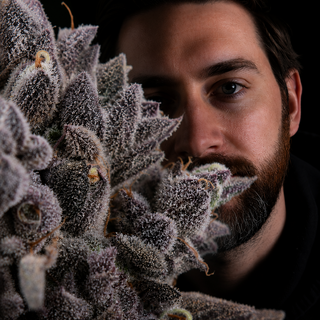
A conversation between Matt Clifton, Chief Communications Officer at Dalgety, and Brady, Head Grower
Brady is rarely away from the facility.
Like most head growers, his focus is firmly rooted in the day-to-day realities of cultivation; monitoring, refining, and making the thousands of small decisions that ultimately define consistency at scale. So, when we found ourselves at the International Cannabis Business Conference in Berlin, surrounded by new technologies and industry conversations, it presented something of a rarity… time!
Time not just to explore what’s next for the industry, but to step back and talk about something we don’t often get the chance to unpack properly; how decisions are actually made around what to grow.
Because while much of the conversation in cannabis centres on what’s available today, the reality is that those decisions were made many months earlier, often under constraint, and always with a degree of uncertainty.
This conversation is an attempt to shed some light on that process; the thinking, the trade-offs, and the responsibility that sits behind every decision.
Matt Clifton:
Brady, people often assume that selecting a strain is about chasing what’s popular at the time. How do you actually think about it?
Brady:
It’s a bit more complex than that.
What we’re selecting today won’t reach a patient for the best part of a year. So, you’re not growing for what people want now, you’re trying to anticipate what they might need in the future.
That becomes even more important when capacity is limited. Every decision has a consequence, because once you commit space to something, you’re making a call on what you’re not growing at the same time.
Matt:
So where does that process start?
Brady:
With genetics.
We work with trusted providers and well-understood lineages, because that gives us a foundation to build from. But even then, what you get out of a strain isn’t guaranteed, that’s where the pheno hunt comes in.
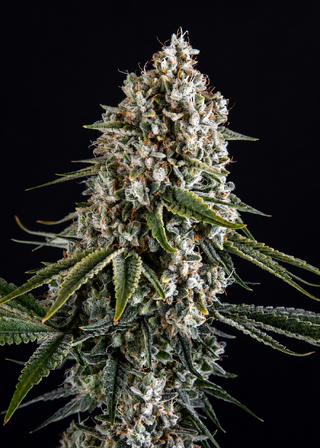
You’re looking through a large number of plants to find the one that expresses in a way that’s both interesting and suitable for what we need.
Matt:
You’ve spoken about pheno hunting and discovering something unexpected, but I imagine that’s not always the case. Are there instances where you’re working with something more intentional from the outset?
Brady:
Yes, and it’s important to have both approaches.
Sometimes you’re searching broadly and hoping to find something that stands out; that’s where you get those real outliers that you wouldn’t necessarily predict. However, generally you’re working with a much clearer idea of what you’re looking for from the start.
We had a situation recently where we were hunting for a particular profile; aroma, potency, plant/flower structure, etc. This gave us a plan. We had an idea what genetic lineage carried these traits, and could then track this back to a breeder working with these families of plants.
Sure enough we were able to find what we were looking for, and I would even go so far as to say that what we found exceeded expectations.
Matt:
And does that change how you approach the selection process?
Brady:
It can do.
Typically, a lot of the focus is on selecting from the female expression, because that’s where you see the full characteristics of the plant. But there are instances where something stands out earlier in the process.
We had one example recently where a particular characteristic came through on the male side, something we recognised and wanted to preserve. That’s less common, but when it does happen, it can be quite powerful if it translates well.
Matt:
And in this case, it did?
Brady:
Yes, it did.
But it still goes through the same level of scrutiny as anything else. Just because you’re aiming for something specific doesn’t mean it gets a free pass. It still has to prove itself in terms of consistency, behaviour at scale, and how it performs through the full process.
That’s always the deciding factor in the end.
Consistency, first and foremost.
It’s not just about how a plant looks or smells, it’s how it behaves across the entire lifecycle. Can it be grown consistently? Does it respond well to the environment? How does it dry? How does it cure? How will it perform alongside other cultivars in the room? Does it hold its characteristics batch to batch?
Some plants look great initially but don’t translate well when you scale them or standardise the process. Others might not stand out straight away but prove to be far more reliable over time.
Matt:
Are you looking for anything specific when you’re going through that process?
Brady:
We’re always looking for something distinctive, but it has to sit within a broader framework.
There’s no point finding something unique if it can’t be reproduced consistently or doesn’t fit within a medical setting. So you’re balancing uniqueness with stability.
And you’re also thinking about range. With a smaller, craft facility like ours, every decision carries weight. We need to produce products that serve a range of patient needs, not just focus on one type of outcome.
Matt:
That’s interesting, so it’s less about chasing extremes?
Brady:
Exactly.
You’re not trying to push everything in one direction. You’re trying to create balance across what you produce.
Different plants behave differently, and different patients respond differently. Our job is to reflect that, rather than narrow it down to a single characteristic.
Matt:
There’s often a perception that the market offers huge diversity; hundreds of strains, all with different characteristics. How do you see that?
Brady:
There is diversity, but it’s not always as broad as it appears on the surface.
A lot of what’s available today comes from a relatively narrow pool of genetics that’s been recombined over time. So, while the names might be different, the underlying lineage can often be quite similar.
That doesn’t mean there’s no variation, there absolutely is. But it does mean that finding something genuinely different, something that expresses in a way that stands apart, is quite rare.
Matt:
Does that change how you approach selection?
Brady:
For sure.
You have to be quite deliberate about what you’re looking for. It’s not just about picking something with a new name or a different combination on paper, it’s about what actually shows up when you grow it.
That’s where the pheno hunt becomes important. You’re not just validating what you expect to see, you’re looking for something that genuinely adds to the range of what you can produce.
And again, it has to meet all the other criteria; uniformity, consistency, scalability, and suitability for a medical environment.

Matt:
What about the things that don’t make the cut?
Brady:
There are a lot of them!
Not everything that looks good ends up being suitable. Some of the best-looking plants won’t perform the way we need them to, they are missing particular traits of interest, or they won’t deliver the consistency required.
That’s part of the process. You’re constantly making decisions about what earns its place. And when you’re operating at capacity, those decisions become even more deliberate.
Matt:
One area that probably doesn’t get much attention is naming. How much does that matter?
Brady:
More than people might think.
Names often come from the original genetics, and they can carry a lot of expectation. But once you’ve gone through a pheno hunt, you sometimes find that what you’ve selected doesn’t quite match what the name suggests.
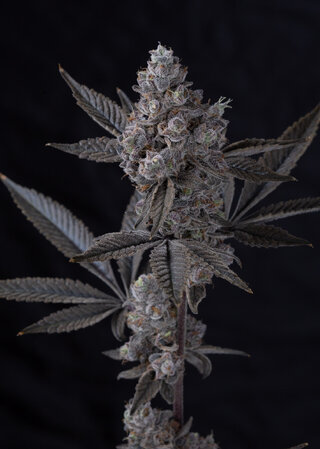
We had an example of that recently. We found a really interesting outlier, exactly what you’re hoping for, but it expressed quite differently to what the name would lead you to expect.
From a cultivation perspective, that’s exciting. But from a patient or clinician perspective, it can be confusing.
So we kept the lineage clearly documented but adjusted the name to better reflect the phenotype we were actually taking forward.
Matt:
Why is that level of accuracy important?
Brady:
Because this is a medical product.
If a name creates an expectation, it needs to be grounded in what the patient will actually receive. Otherwise, you’re relying on assumptions that may not hold true once the plant has been grown and standardised.
It’s about being clear and responsible in how things are presented.
Matt:
You mentioned earlier that not everything translates well at scale. How important is that consideration?
Brady:
It’s critical.
Something can work very well in a small environment or under specific conditions, but that doesn’t mean it will behave the same way when you need to produce it consistently.
We’re not just selecting for what works once, we’re selecting for what works repeatedly, under controlled conditions, over time.
Matt:
And how does that tie into the broader direction of the industry?
Brady:
I think the industry is moving towards greater consistency and understanding.
There’s always going to be interest in individual characteristics; whether that’s potency, aroma, or anything else, but over time, the focus shifts to reliability.
In a medical setting, that’s what matters. You need to be able to produce something that behaves as expected, every time.
Matt:
Final question! What do you enjoy most about the process?
Brady:
It’s seeing your hard work grow and pay off in front of your eyes. It’s also the potential of finding something new during a pheno hunt that has not been seen before, and then refining it into a consistent medical product.
You’re working with something that’s naturally variable, but you’re trying to bring consistency to it. You’re always learning, always refining.
Cultivation is an evolving science and even with 20+ years of experience, I’m still learning new things.

At Dalgety, strain selection isn’t about chasing trends or headlines, it’s about making considered decisions, grounded in experience, that stand up to the demands of a medical environment.
Thank you to Brady Green, our Head Grower, for taking the time to explain this process.


