
The Channel Island of Jersey supplied Germany’s medical cannabis market with more flower than Colombia last year, recent data shows.
All exports came from one single cultivator, accounting for around 90% of the island’s total output and putting Jersey on the map as one of the leading producers of medical cannabis per capita.
Since the introduction of Germany’s cannabis reforms in April 2024, which partially legalised adult-use and simplified access for patients, the country has seen a surge in demand for prescriptions, solidifying its position as Europe’s largest and most developed market.
Data released by Germany’s Ministry of Health in March shows imports of medical cannabis surpassed 200 tonnes for the first time last year, nearly triple 2024’s total.
But the figures also point to subtle changes in supply chain dynamics.
While overall imports fell by approximately 4.5% in the final quarter, exports from the UK (including the British Channel Islands) increased by more than 11 times year-on-year, reaching over 1,500kg in Q4, the highest quarterly total on record.
Speaking to Business of Cannabis previously, analysts at Prohibition Partners identified “stronger supply chains” emerging from UK exporters — and “primarily Jersey”.
Over the last two years, the small Channel Island of Jersey, a self-governing British Crown Dependency between the UK and France, has quietly become a hub for medical cannabis manufacturing.
According to Steven Tan, CEO of Northern Leaf, which operates the largest EU-GMP facility on the island, it is now one of Europe’s leading producers.
The company, which produces bulk flower API for use in finished cannabis-based medicines, is one of six licensed producers in the island but accounts for an estimated 90% of all current medical cannabis production, all of which is exported to European markets such as the UK and Germany.
In 2025, the company supplied 3,590kg to Germany, making it the largest exporter of UK-produced medical cannabis flower into the German market.

Steven Tan, CEO of Northern Leaf
Tan, who brings 15 years of experience in the cannabis industry, specialising in genetics and large-scale cultivation, was appointed CEO in 2024 following a change in management and ownership at the company.
Drawing on his unique global network and extensive restructuring experience, he has successfully led Northern Leaf through an impressive operational and financial turnaround, increasing capacity from 25% to 75% at its 100,000 sq ft facility, resulting in a fivefold increase in revenue.
Jersey’s medical cannabis industry benefits from a unique regulatory and geographical landscape, Tan says, with what he believes to be the fastest export permit turnaround globally, and a two-hour ferry journey to mainland France, meaning shipments can arrive in Germany as a direct route in 36 hours.
Rapid export certification, quick access to international markets, and strong reliability and responsiveness are crucial factors for ensuring medical cannabis flower remains of a consistent quality and freshness throughout the distribution process.
These factors also enable the company to address what Tan sees as a key structural challenge in the European sector, where many products are still imported from Canada, providing a consistent, reliable, and scalable local supply that can grow and help build global brands.
Medical cannabis is increasingly being positioned by the Government of Jersey and industry bodies as the island’s next major export sector, as traditional Jersey produce like tomatoes and potatoes, declines.
A report recently published by Jersey’s Economy Department found that the industry turned a profit for the first time last year, with over £12m of revenue, almost £50m of investment, and 70 people now working in the sector.
Speaking to the Jersey Evening Post following the report, Jersey’s Economic Development Minister Kirsten Morel called for a “recommitment” to the biopharmaceutical sector, positioning it as a “high-value, low-footprint” industry that could help diversify the economy beyond financial services, which account for around 38% of Jersey’s economy.
It comes amid a much wider push to support long-term economic diversification as Jersey’s finance industry declined by 6.2% in 2024, while agricultural exports have experienced a long-term fall in value.
Jersey’s biggest agricultural export is still Jersey Royals, which make up 95% of all exported fruit and vegetables, but these potatoes too face a downward trend, falling by 11% between 2018 and 2022. Glasshouse crops, including tomatoes, experienced even sharper contraction, declining by more than 60% between 2011 and 2015.
Against this backdrop, the Government’s Export Strategy 2023-2026 identified medical cannabis as providing a “strong opportunity” to build Jersey’s export strength in a new industry while attracting business and investment.
Tan expects the sector could soon generate tens of millions of pounds annually and rival the economic value of Jersey’s potato industry, which was valued at £31.6m in 2017.
Northern Leaf has the capacity to produce 33% of the same revenue as the potato industry, he explains, using less than 1% of the land space.
But for the sector to meet its full potential, the Government must continue to work with companies like Northern Leaf to address some of the remaining barriers to growth, Tan says.
This includes energy bills, which remain high compared to competitors in other countries, and account for around 30% of the company’s operating costs.
“The government has been very supportive, and the fact that they are regulatory driven assures those in the global cannabis industry of our high standards of production and regulation,” says Tan, speaking to Business of Cannabis.
“The challenge Jersey now faces is in further developing its framework to improve downstream value and better understanding the medical cannabis industry’s unique energy tariff and regulatory needs.”
He adds: “Otherwise, over the next few years, companies like Northern Leaf will move more towards a distribution model, and production will naturally be outsourced to third-party countries overseas, which in my view would be missing a one-time opportunity for Jersey to become a major player in the global cannabis cultivation space.”
The post ‘More Cannabis Than Colombia’: How Jersey is Reshaping European Supply Chains appeared first on Business of Cannabis.
Continue reading...
All exports came from one single cultivator, accounting for around 90% of the island’s total output and putting Jersey on the map as one of the leading producers of medical cannabis per capita.
Since the introduction of Germany’s cannabis reforms in April 2024, which partially legalised adult-use and simplified access for patients, the country has seen a surge in demand for prescriptions, solidifying its position as Europe’s largest and most developed market.
Data released by Germany’s Ministry of Health in March shows imports of medical cannabis surpassed 200 tonnes for the first time last year, nearly triple 2024’s total.
But the figures also point to subtle changes in supply chain dynamics.
While overall imports fell by approximately 4.5% in the final quarter, exports from the UK (including the British Channel Islands) increased by more than 11 times year-on-year, reaching over 1,500kg in Q4, the highest quarterly total on record.
Speaking to Business of Cannabis previously, analysts at Prohibition Partners identified “stronger supply chains” emerging from UK exporters — and “primarily Jersey”.
Jersey’s growing role in European supply
Over the last two years, the small Channel Island of Jersey, a self-governing British Crown Dependency between the UK and France, has quietly become a hub for medical cannabis manufacturing.
According to Steven Tan, CEO of Northern Leaf, which operates the largest EU-GMP facility on the island, it is now one of Europe’s leading producers.
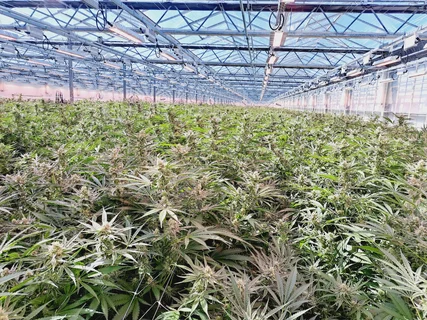
The company, which produces bulk flower API for use in finished cannabis-based medicines, is one of six licensed producers in the island but accounts for an estimated 90% of all current medical cannabis production, all of which is exported to European markets such as the UK and Germany.
In 2025, the company supplied 3,590kg to Germany, making it the largest exporter of UK-produced medical cannabis flower into the German market.
Steven Tan, CEO of Northern Leaf
Turnaround success
Tan, who brings 15 years of experience in the cannabis industry, specialising in genetics and large-scale cultivation, was appointed CEO in 2024 following a change in management and ownership at the company.
Drawing on his unique global network and extensive restructuring experience, he has successfully led Northern Leaf through an impressive operational and financial turnaround, increasing capacity from 25% to 75% at its 100,000 sq ft facility, resulting in a fivefold increase in revenue.
Jersey’s medical cannabis industry benefits from a unique regulatory and geographical landscape, Tan says, with what he believes to be the fastest export permit turnaround globally, and a two-hour ferry journey to mainland France, meaning shipments can arrive in Germany as a direct route in 36 hours.
Rapid export certification, quick access to international markets, and strong reliability and responsiveness are crucial factors for ensuring medical cannabis flower remains of a consistent quality and freshness throughout the distribution process.
These factors also enable the company to address what Tan sees as a key structural challenge in the European sector, where many products are still imported from Canada, providing a consistent, reliable, and scalable local supply that can grow and help build global brands.
READ MORE…
Europe’s CBD U-Turn Set To Cause Widespread Harm To Businesses And Consumers
‘More Cannabis Than Colombia’: How Jersey is Reshaping European Supply Chains

The Fight for Cannabis Rescheduling Is Far From Over

Agential Cannabis 2026 Takes Shape as APAC’s B2B Medicinal Cannabis Marketplace
A new export industry emerges
Medical cannabis is increasingly being positioned by the Government of Jersey and industry bodies as the island’s next major export sector, as traditional Jersey produce like tomatoes and potatoes, declines.
A report recently published by Jersey’s Economy Department found that the industry turned a profit for the first time last year, with over £12m of revenue, almost £50m of investment, and 70 people now working in the sector.
Speaking to the Jersey Evening Post following the report, Jersey’s Economic Development Minister Kirsten Morel called for a “recommitment” to the biopharmaceutical sector, positioning it as a “high-value, low-footprint” industry that could help diversify the economy beyond financial services, which account for around 38% of Jersey’s economy.
It comes amid a much wider push to support long-term economic diversification as Jersey’s finance industry declined by 6.2% in 2024, while agricultural exports have experienced a long-term fall in value.
Jersey’s biggest agricultural export is still Jersey Royals, which make up 95% of all exported fruit and vegetables, but these potatoes too face a downward trend, falling by 11% between 2018 and 2022. Glasshouse crops, including tomatoes, experienced even sharper contraction, declining by more than 60% between 2011 and 2015.
Against this backdrop, the Government’s Export Strategy 2023-2026 identified medical cannabis as providing a “strong opportunity” to build Jersey’s export strength in a new industry while attracting business and investment.
Tan expects the sector could soon generate tens of millions of pounds annually and rival the economic value of Jersey’s potato industry, which was valued at £31.6m in 2017.
Northern Leaf has the capacity to produce 33% of the same revenue as the potato industry, he explains, using less than 1% of the land space.
A ‘one-time opportunity’ for Jersey
But for the sector to meet its full potential, the Government must continue to work with companies like Northern Leaf to address some of the remaining barriers to growth, Tan says.
This includes energy bills, which remain high compared to competitors in other countries, and account for around 30% of the company’s operating costs.
“The government has been very supportive, and the fact that they are regulatory driven assures those in the global cannabis industry of our high standards of production and regulation,” says Tan, speaking to Business of Cannabis.
“The challenge Jersey now faces is in further developing its framework to improve downstream value and better understanding the medical cannabis industry’s unique energy tariff and regulatory needs.”
He adds: “Otherwise, over the next few years, companies like Northern Leaf will move more towards a distribution model, and production will naturally be outsourced to third-party countries overseas, which in my view would be missing a one-time opportunity for Jersey to become a major player in the global cannabis cultivation space.”
The post ‘More Cannabis Than Colombia’: How Jersey is Reshaping European Supply Chains appeared first on Business of Cannabis.
Continue reading...


