
After years of false starts, political delays and administrative paralysis, the United States federal government has taken its first concrete step toward rescheduling cannabis.
Acting Attorney General Todd Blanche signed an order on April 22, moving state-licensed medical cannabis and FDA-approved cannabis drug products from Schedule I to Schedule III of the Controlled Substances Act (CSA), the most significant shift in US federal cannabis policy in more than half a century.
However, this is not the rescheduling the industry has been expecting or preparing for.
Here’s what’s changed in a nutshell:
Blanche’s order, which is effective from yesterday (April 22, 2026), has moved some cannabis products to the less stringently regulated Schedule III classification, while a significant proportion of the US cannabis industry remains in Schedule I.
Cannabis, which is subject to a state medical cannabis license, alongside any FDA-approved cannabis-based drug products, has now officially been reclassified as a Schedule III substance under the CSA, a classification reserved for substances with accepted medical use and moderate to low potential for dependence.
This formally ends the federal government’s longstanding position that cannabis has no accepted medical use, a finding the Department of Health and Human Services (DHHS) had itself contradicted in its 2023 scientific review.
The practical consequences for state-licensed medical operators are significant. They will no longer be subject to Section 280E of the Internal Revenue Code, which has barred cannabis businesses from deducting ordinary operating expenses on federal tax returns.
The order also establishes an expedited DEA registration process for state-licensed entities, with applications submitted within 60 days of publication processed within six months. During that period, operators may continue to operate under their existing state licences.
The order also takes direct aim at one of the most persistent obstacles to cannabis research. Researchers who obtain marijuana from state-licensed sources for scientific purposes will incur no civil or criminal liability under the CSA, provided they hold valid DEA research registrations, removing a barrier that has long deterred institutional engagement with cannabis science.
Any cannabis that is not covered by a state medical license or an FDA approval remains a Schedule I controlled substance. In a nutshell, this means that adult-use cannabis has not been moved to Schedule III.
As such, recreational operators, including those in the 24 states with adult-use markets, cannot immediately claim Schedule III status or 280E relief for their non-medical operations.
Unlicensed bulk marijuana, recreational cannabis, synthetic THC and marijuana extracts outside the medical licensing system are all explicitly excluded from reclassification.
The order is explicit that ‘nothing in this rule constitutes a determination regarding federal tax liability,’ and that operators should consult tax counsel regarding the applicability of 280E to their specific circumstances.
The reference to FDA-approved cannabis drug products is more limited in practice than it might appear. Sativex, the oromucosal cannabis spray developed by GW Pharmaceuticals and ubiquitous across European medical cannabis markets, has never received FDA approval in the United States, despite being authorised in Canada and several European countries. It therefore falls outside the scope of the order’s FDA-approved category entirely.
In reality, only one naturally cannabis-derived drug product currently holds FDA approval, GW’s (now Jazz Pharmaceuticals) other flagship cannabis-based medicine, Epidiolex.
The purified cannabidiol oral solution is approved for the treatment of seizures associated with Lennox-Gastaut syndrome, Dravet syndrome, and tuberous sclerosis complex.
Three further products, Marinol, Syndros and Cesamet, contain synthetic dronabinol or nabilone. These are not derived from the cannabis plant, so they fall outside the CSA definition of ‘marijuana’ entirely. Furthermore, they were already rescheduled separately years ago. Marinol and Syndros sit in Schedule II or III, depending on their form, and Cesamet in Schedule II, meaning they’re effectively untouched by this order.
The order’s statement that ‘synthetic THC remains in Schedule I’ refers to other synthetically derived tetrahydrocannabinols, things like delta-10-THC produced artificially, not to the approved synthetic drugs, which were already handled separately.
For the US cannabis industry, the most immediately consequential, and still unresolved, element of Thursday’s order concerns back taxes.
The order confirms that state-licensed medical operators will no longer be subject to Section 280E going forward. But Blanche stops well short of resolving the billions of dollars in disputed prior-year tax liability that has been accumulating since major operators began withholding 280E payments in anticipation of rescheduling from as far back as 2023.
Blanche ‘encourages’ the Treasury Secretary ‘to consider providing retrospective relief from Section 280E liability for taxable years in which a state licensee operated under a state medical marijuana licence.’
While a promising signal, it falls well short of a reliable determination. The order explicitly states that ‘nothing in this rule constitutes a determination regarding federal tax liability,’ directing operators to seek counsel on their specific circumstances.
The stakes are substantial. As Business of Cannabis reported last month, major US multistate operators are collectively carrying more than $1.6 billion in disputed 280E tax positions. Trulieve alone has approximately $445 million in potential tax exposure tied to disputed 280E positions, including $412.6 million explicitly related to its 280E challenge.
As recently as March 6, the IRS argued in Tax Court in the case of New Mexico Top Organics v. Commissioner that past 280E taxes are owed in full regardless of rescheduling, and that any relief would be prospective only.
The agency also warned that operators whose legal reasoning does not meet its ‘reasonable basis’ standard face penalties on top of the underlying bills. Thursday’s order does not change that position. Whether the IRS now softens its stance in light of the order, or continues to pursue the $1.6 billion in disputed back taxes, will be among the most closely watched developments in the weeks ahead.
There is a further complication for the majority of large MSOs that serve both medical and recreational markets, which includes most of the large MSOs.
Because recreational cannabis remains Schedule I under Thursday’s order, operators may only be able to claim 280E relief for the medical portion of their business, requiring careful accounting separation of medical and recreational revenues. The DOJ has indicated it wants relief to apply to state medical licensees broadly, but the mechanics of how that works in practice for dual-licence operators have not yet been clarified.
The legal mechanism Blanche used is significant and worth understanding. Rather than completing the normal notice-and-comment rulemaking process, which had stalled amid the interlocutory appeal, the order relies on a provision of the CSA, 21 U.S.C. 811(d)(1), that allows the Attorney General to schedule a drug by order rather than by rule when required by US obligations under international treaties. The relevant treaty is the UN Single Convention on Narcotic Drugs of 1961.
This pathway bypasses the Administrative Procedure Act’s notice-and-comment requirements entirely, meaning the order took effect immediately without a public comment period. The order acknowledges this explicitly, stating that the ‘DEA believes that the notice-and-comment requirements of the APA do not apply to this scheduling action.’
This is legally cleaner in terms of speed, but may be more vulnerable to challenge. Opponents could argue that the treaty rationale is being used as a pretext to avoid the scrutiny that a normal rulemaking would have attracted.
The order is explicitly framed as Phase 1 of a two-stage process. Beginning June 29, a new expedited administrative hearing will consider the broader rescheduling of all cannabis from Schedule I to Schedule III, the fuller reform that the Biden administration had initiated and the Trump executive order had directed.
The prior hearing process, which stalled in January 2025 following the interlocutory appeal over alleged DEA bias, has been formally terminated.
Legal challenges to the order are widely expected. Anti-cannabis groups have previously signalled their intention to challenge any rescheduling action, and the unconventional treaty pathway used here may provide additional grounds for litigation. Pro-reform advocates may separately argue that the partial nature of the order, leaving recreational cannabis in Schedule I, does not go far enough.
“The Department of Justice is delivering on President Trump’s promise to expand Americans’ access to medical treatment options,” Blanche said. “This rescheduling action allows for research on the safety and efficacy of this substance, ultimately providing patients with better care and doctors with more reliable information.”
For an industry that has learned to temper its expectations on federal reform, the response to Thursday’s announcement was measured rather than euphoric.
Boris Jordan, chairman and CEO of Acreage Holdings, called it ‘the biggest change for cannabis in 55 years, and a clear signal that federal policy is beginning to catch up with science, public opinion, and economic realities.’
Jordan, one of the few industry voices to correctly identify the treaty mechanism underpinning the order, noted that the two-phase structure means ‘the process outlined provides tax relief today to state-licensed medical operators, with relief expected for the broader state-licensed market later this year.’
Kim Sanchez Rael, CEO and co-founder of Azuca, added: “Federal rescheduling is a pivotal step forward, and a sign that policy is finally aligning with science over fear and ignorance.
“It is certainly not a panacea, but a step in the right direction that, once implemented, has the potential to unlock real relief for operators and steady the industry.”
She also raised a point that rescheduling and hemp reform will ultimately only work with a cohesive regulatory framework treating cannabis and hemp as one plant rather than two industries ‘forced to advance competing agendas because of nonsensical legacy policies.’
Nicolas Guarino, co-founder and CEO of Jaunty and co-founder of the Empire Cannabis Manufacturers Alliance, focused on what remains unresolved.
“Adult-use markets in 24 states and DC would still face significant federal limitations that hinder the industry from reaching its full potential,” he said, adding that while 280E relief was the most immediate priority for operators across the supply chain, he hoped the decision would set a precedent for further measures, including SAFE Banking and ultimately federal legalisation.
Omar Delgado, VP of Retail at Ivy Hall, Illinois’s first social equity dispensary, offered the most concise read of the situation: “Moving FDA-approved and state-licensed cannabis to Schedule III is a real step forward: it eases research barriers, opens the door to 280E relief for compliant operators, and signals that the federal government is finally taking cannabis seriously as medicine. A full rescheduling hearing in June is the next hurdle, and we’ll be watching closely.”
The post The US Officially Reschedules Cannabis, Partly…. appeared first on Business of Cannabis.
Continue reading...
Acting Attorney General Todd Blanche signed an order on April 22, moving state-licensed medical cannabis and FDA-approved cannabis drug products from Schedule I to Schedule III of the Controlled Substances Act (CSA), the most significant shift in US federal cannabis policy in more than half a century.
However, this is not the rescheduling the industry has been expecting or preparing for.
Here’s what’s changed in a nutshell:
 Medical cannabis is now Schedule III in the US, the most significant shift in federal drug policy in over 50 years
 State-licensed medical operators no longer subject to the punitive 280E tax provision that has crippled industry finances for years
 Research barriers significantly reduced, scientists can now access state-licensed cannabis for federally registered research without fear of prosecution
 An expedited DEA registration process is being established for state medical licensees
 A new hearing begins June 29 to consider full rescheduling of all cannabis to Schedule III
 Recreational cannabis remains Schedule I, adult-use operators get no immediate relief
 Retrospective 280E relief for prior tax years is encouraged but not guaranteed, Treasury has not acted and the IRS has not changed its position
 Operators serving both medical and recreational markets can only claim relief for their medical operations for now
 Legal challenges are expected, the unconventional treaty pathway used to bypass normal rulemaking may be vulnerable to challenge
 This is Phase 1 of a two-phase process, the job is not finished
Medical vs recreational cannabis
Blanche’s order, which is effective from yesterday (April 22, 2026), has moved some cannabis products to the less stringently regulated Schedule III classification, while a significant proportion of the US cannabis industry remains in Schedule I.
Cannabis, which is subject to a state medical cannabis license, alongside any FDA-approved cannabis-based drug products, has now officially been reclassified as a Schedule III substance under the CSA, a classification reserved for substances with accepted medical use and moderate to low potential for dependence.
This formally ends the federal government’s longstanding position that cannabis has no accepted medical use, a finding the Department of Health and Human Services (DHHS) had itself contradicted in its 2023 scientific review.
The practical consequences for state-licensed medical operators are significant. They will no longer be subject to Section 280E of the Internal Revenue Code, which has barred cannabis businesses from deducting ordinary operating expenses on federal tax returns.
The order also establishes an expedited DEA registration process for state-licensed entities, with applications submitted within 60 days of publication processed within six months. During that period, operators may continue to operate under their existing state licences.
The order also takes direct aim at one of the most persistent obstacles to cannabis research. Researchers who obtain marijuana from state-licensed sources for scientific purposes will incur no civil or criminal liability under the CSA, provided they hold valid DEA research registrations, removing a barrier that has long deterred institutional engagement with cannabis science.
What remains in Schedule I
Any cannabis that is not covered by a state medical license or an FDA approval remains a Schedule I controlled substance. In a nutshell, this means that adult-use cannabis has not been moved to Schedule III.
As such, recreational operators, including those in the 24 states with adult-use markets, cannot immediately claim Schedule III status or 280E relief for their non-medical operations.
Unlicensed bulk marijuana, recreational cannabis, synthetic THC and marijuana extracts outside the medical licensing system are all explicitly excluded from reclassification.
The order is explicit that ‘nothing in this rule constitutes a determination regarding federal tax liability,’ and that operators should consult tax counsel regarding the applicability of 280E to their specific circumstances.
‘Synthetic THC’ and FDA approved cannabis-medicines
The reference to FDA-approved cannabis drug products is more limited in practice than it might appear. Sativex, the oromucosal cannabis spray developed by GW Pharmaceuticals and ubiquitous across European medical cannabis markets, has never received FDA approval in the United States, despite being authorised in Canada and several European countries. It therefore falls outside the scope of the order’s FDA-approved category entirely.
In reality, only one naturally cannabis-derived drug product currently holds FDA approval, GW’s (now Jazz Pharmaceuticals) other flagship cannabis-based medicine, Epidiolex.
The purified cannabidiol oral solution is approved for the treatment of seizures associated with Lennox-Gastaut syndrome, Dravet syndrome, and tuberous sclerosis complex.
Three further products, Marinol, Syndros and Cesamet, contain synthetic dronabinol or nabilone. These are not derived from the cannabis plant, so they fall outside the CSA definition of ‘marijuana’ entirely. Furthermore, they were already rescheduled separately years ago. Marinol and Syndros sit in Schedule II or III, depending on their form, and Cesamet in Schedule II, meaning they’re effectively untouched by this order.
The order’s statement that ‘synthetic THC remains in Schedule I’ refers to other synthetically derived tetrahydrocannabinols, things like delta-10-THC produced artificially, not to the approved synthetic drugs, which were already handled separately.
Under the decisive leadership of @POTUS, this Department of Justice is delivering on his promise to improve American healthcare. This includes:
• Immediately rescheduling FDA-approved marijuana and state-licensed marijuana from Schedule I to Schedule IIl
• Ordering a new,… pic.twitter.com/DUtqKQgavl
— Acting AG Todd Blanche (@DAGToddBlanche) April 23, 2026
The 280E retrospective question
For the US cannabis industry, the most immediately consequential, and still unresolved, element of Thursday’s order concerns back taxes.
The order confirms that state-licensed medical operators will no longer be subject to Section 280E going forward. But Blanche stops well short of resolving the billions of dollars in disputed prior-year tax liability that has been accumulating since major operators began withholding 280E payments in anticipation of rescheduling from as far back as 2023.
Blanche ‘encourages’ the Treasury Secretary ‘to consider providing retrospective relief from Section 280E liability for taxable years in which a state licensee operated under a state medical marijuana licence.’
While a promising signal, it falls well short of a reliable determination. The order explicitly states that ‘nothing in this rule constitutes a determination regarding federal tax liability,’ directing operators to seek counsel on their specific circumstances.
The stakes are substantial. As Business of Cannabis reported last month, major US multistate operators are collectively carrying more than $1.6 billion in disputed 280E tax positions. Trulieve alone has approximately $445 million in potential tax exposure tied to disputed 280E positions, including $412.6 million explicitly related to its 280E challenge.
As recently as March 6, the IRS argued in Tax Court in the case of New Mexico Top Organics v. Commissioner that past 280E taxes are owed in full regardless of rescheduling, and that any relief would be prospective only.
The agency also warned that operators whose legal reasoning does not meet its ‘reasonable basis’ standard face penalties on top of the underlying bills. Thursday’s order does not change that position. Whether the IRS now softens its stance in light of the order, or continues to pursue the $1.6 billion in disputed back taxes, will be among the most closely watched developments in the weeks ahead.
There is a further complication for the majority of large MSOs that serve both medical and recreational markets, which includes most of the large MSOs.
Because recreational cannabis remains Schedule I under Thursday’s order, operators may only be able to claim 280E relief for the medical portion of their business, requiring careful accounting separation of medical and recreational revenues. The DOJ has indicated it wants relief to apply to state medical licensees broadly, but the mechanics of how that works in practice for dual-licence operators have not yet been clarified.
READ MORE…

CRS Report Suggests 280E Could be Unconstitutional for Cannabis Businesses
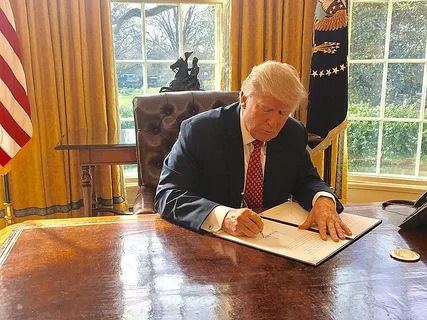
Republican Lawmakers Openly Defy Trump on Cannabis Rescheduling

Drug War 2.0 Puts International Cannabis Reform at Risk
How this works legally
The legal mechanism Blanche used is significant and worth understanding. Rather than completing the normal notice-and-comment rulemaking process, which had stalled amid the interlocutory appeal, the order relies on a provision of the CSA, 21 U.S.C. 811(d)(1), that allows the Attorney General to schedule a drug by order rather than by rule when required by US obligations under international treaties. The relevant treaty is the UN Single Convention on Narcotic Drugs of 1961.
This pathway bypasses the Administrative Procedure Act’s notice-and-comment requirements entirely, meaning the order took effect immediately without a public comment period. The order acknowledges this explicitly, stating that the ‘DEA believes that the notice-and-comment requirements of the APA do not apply to this scheduling action.’
This is legally cleaner in terms of speed, but may be more vulnerable to challenge. Opponents could argue that the treaty rationale is being used as a pretext to avoid the scrutiny that a normal rulemaking would have attracted.
What comes next
The order is explicitly framed as Phase 1 of a two-stage process. Beginning June 29, a new expedited administrative hearing will consider the broader rescheduling of all cannabis from Schedule I to Schedule III, the fuller reform that the Biden administration had initiated and the Trump executive order had directed.
The prior hearing process, which stalled in January 2025 following the interlocutory appeal over alleged DEA bias, has been formally terminated.
Legal challenges to the order are widely expected. Anti-cannabis groups have previously signalled their intention to challenge any rescheduling action, and the unconventional treaty pathway used here may provide additional grounds for litigation. Pro-reform advocates may separately argue that the partial nature of the order, leaving recreational cannabis in Schedule I, does not go far enough.
“The Department of Justice is delivering on President Trump’s promise to expand Americans’ access to medical treatment options,” Blanche said. “This rescheduling action allows for research on the safety and efficacy of this substance, ultimately providing patients with better care and doctors with more reliable information.”
Cautious optimism
For an industry that has learned to temper its expectations on federal reform, the response to Thursday’s announcement was measured rather than euphoric.
Boris Jordan, chairman and CEO of Acreage Holdings, called it ‘the biggest change for cannabis in 55 years, and a clear signal that federal policy is beginning to catch up with science, public opinion, and economic realities.’
Jordan, one of the few industry voices to correctly identify the treaty mechanism underpinning the order, noted that the two-phase structure means ‘the process outlined provides tax relief today to state-licensed medical operators, with relief expected for the broader state-licensed market later this year.’
Kim Sanchez Rael, CEO and co-founder of Azuca, added: “Federal rescheduling is a pivotal step forward, and a sign that policy is finally aligning with science over fear and ignorance.
“It is certainly not a panacea, but a step in the right direction that, once implemented, has the potential to unlock real relief for operators and steady the industry.”
She also raised a point that rescheduling and hemp reform will ultimately only work with a cohesive regulatory framework treating cannabis and hemp as one plant rather than two industries ‘forced to advance competing agendas because of nonsensical legacy policies.’
Nicolas Guarino, co-founder and CEO of Jaunty and co-founder of the Empire Cannabis Manufacturers Alliance, focused on what remains unresolved.
“Adult-use markets in 24 states and DC would still face significant federal limitations that hinder the industry from reaching its full potential,” he said, adding that while 280E relief was the most immediate priority for operators across the supply chain, he hoped the decision would set a precedent for further measures, including SAFE Banking and ultimately federal legalisation.
Omar Delgado, VP of Retail at Ivy Hall, Illinois’s first social equity dispensary, offered the most concise read of the situation: “Moving FDA-approved and state-licensed cannabis to Schedule III is a real step forward: it eases research barriers, opens the door to 280E relief for compliant operators, and signals that the federal government is finally taking cannabis seriously as medicine. A full rescheduling hearing in June is the next hurdle, and we’ll be watching closely.”
The post The US Officially Reschedules Cannabis, Partly…. appeared first on Business of Cannabis.
Continue reading...

